Boston Area Poetry Readings for April/May 2016

National Poetry Month culminates this week with the Mass Poetry Festival — an event that fills all of downtown Salem with readings from poetic luminaries, a small press fair, and workshops of all kinds. The poetic fervor continues into May.

Thanks to those of you who came to the workshop I did last weekend at the Rozzie Public Library — if you missed it and want to know about the next one, sign up for my mailing list.

All events below take place in Massachusetts unless otherwise noted.

Thursday, April 28, 6 pm
Matvei Yankelevich
Woodberry Poetry Room, Lamont Library, Room 330
Harvard University
Cambridge

Continue reading “Boston Area Poetry Readings for April/May 2016”

Interview with Widows’ Handbook Editor Jacqueline Lapidus

It was through Holly Zeeb that I first learned of The Widows’ Handbook: Poetic Reflections on Grief and Survival, an anthology of poetry written by, for, and about women who had lost their life partners. Holly, a fellow student of the PoemWorks workshop and an excellent poet in her own right, was one of the many poets who contributed to the book. Holly lived with cancer for years before succumbing to it in late January 2016. Her literary legacy includes not only her poems in The Widows’ Handbook, but also a chapbook from Finishing Line Press and Eye of the Beholder, a book-length collection in limited run. In addition to — or perhaps because of — her poetry, she left behind a wide circle of friends and fellow writers. They crowded Newtonville Books to grieving friends read her work. I got one of the last seats in the house and found it deeply affecting to hear the finished versions of poems I saw take shape in workshop.

I met Jacqueline Lapidus through entirely different circumstances and only realized her connection to The Widows’ Handbook and to Holly after we had been corresponding for some time. The anthology had been on my reading list for some time, and meeting Jacqueline was the push I needed to crack the book. A slight woman with a mop of curly blonde hair, Jacqueline has a fascinating life story that spans continents and waves of the feminist movement. She was kind enough to talk with me about the societal implications of widowhood, her own experiences with it, and the work involved to create such a comprehensive anthology.

What role did poetry play in the grieving process for yourself and the poets in this collection?

My significant other, with whom I was involved on and off over more than 40 years, died suddenly the day after Thanksgiving 2004. We’d been together continuously for the past 10 years of his life.  I wrote poems to deal with my own grief, and anger, and frustration, because writing poems is what I do when I have strong feelings. I’ve done it all my life, and I’ve always sent my work out in the hope of getting it published. But the poems about widowhood that I submitted to literary magazines were rejected, probably because the editors—mostly young—couldn’t deal with such a painful theme. Then Lise Menn, a college classmate of mine who was also widowed, came to Boston for a conference. We went out to dinner, and while we were waiting for our order, she showed me her widow poems. After reading them, I had this bright idea. I said, “You know, this would be a great topic for an anthology.” And when you have a bright idea, well, you’re the one who has to make it happen. That was how we got started on what became The Widows’ Handbook. I pretty much knew what we’d have to do because I’ve worked in publishing for most of my life. I knew there was a potentially huge readership out there—eight million widows in this country alone!—and I knew that nobody else had done this kind of anthology before.

More experienced poets in The Widows’ Handbook, wrote widow poems because writing poems was what they always did. Lise Menn, my co-editor, wrote her widow poems particularly as a way to communicate her feelings to her therapist, because at first she couldn’t talk about her grief directly. But some of our contributors hadn’t written poetry at all before they were widowed. They started writing, sometimes in the context of therapy or writing groups, as a way of coping.

Continue reading “Interview with Widows’ Handbook Editor Jacqueline Lapidus”

Widows, by Jacqueline Lapidus

You are the salt of the earth
If the salt has lost its savor, wherewith
shall it be salted?
—Matthew 5:13

She was driving home on a Friday night
suddenly he slumped forward in the passenger seat
and in mid-sentence he was gone I pulled over,
I called 911, I begged him, talk to me, talk to me!

Every move is sad and hard to make
the only positive distraction for her is work
her friends make sure she’s not alone during the week,
rattling around in that enormous house I’m numb,
I’m on automatic pilot, I still can’t talk

He was closing the summer house and didn’t want help
The fridge was full of food for Thanksgiving
her pie was cooling on the rack any minute his key
would be turning in the lock
I called the caretaker and told him to look
everywhere, even up in the attic
He was in the kitchen, he’d had a stroke

Continue reading “Widows, by Jacqueline Lapidus”

UPDATED April 2016 Boston Poetry Readings

National Poetry Month offers a dizzying array of events across the nation, but especially in Boston. Updated listings appear below. You can see my teacher Barbara Helfgott Hyett read alongside an old poet-friend Nicole Terez Dutton at the Newton Free Library on Tuesday, April 12 at 7pm. You can meet me in person at the Roslindale Public Library on Saturday, April 23 at noon. And if you have the time, inclination, and stamina, you can attend at least one reading on just about every day this month. All readings are in Mass unless otherwise noted.

Thursday, April 7, 6 pm
Martin Corless-Smith
introduced by Boyd Nielson
Woodberry Poetry Room, Lamont Library, Room 330
Harvard University
Cambridge

Thursday, April 7, 7 pm
Cammy Thomas, Sophia Yee, Ros Zimmermann
National Poetry Month Celebration
Cary Memorial Library
1874 Mass. Ave.
Lexington

Continue reading “UPDATED April 2016 Boston Poetry Readings”

April 2016 Poetry Readings in Boston MA and Environs

NOTE: You can find an updated version of these listings here.

April is National Poetry Month, which means that readings and classes abound. Here are my top picks:

Listings follow. All venues are in Massachusetts (USA) unless otherwise noted: Continue reading “April 2016 Poetry Readings in Boston MA and Environs”

Annie Finch, Author of Spells: New and Selected Poems

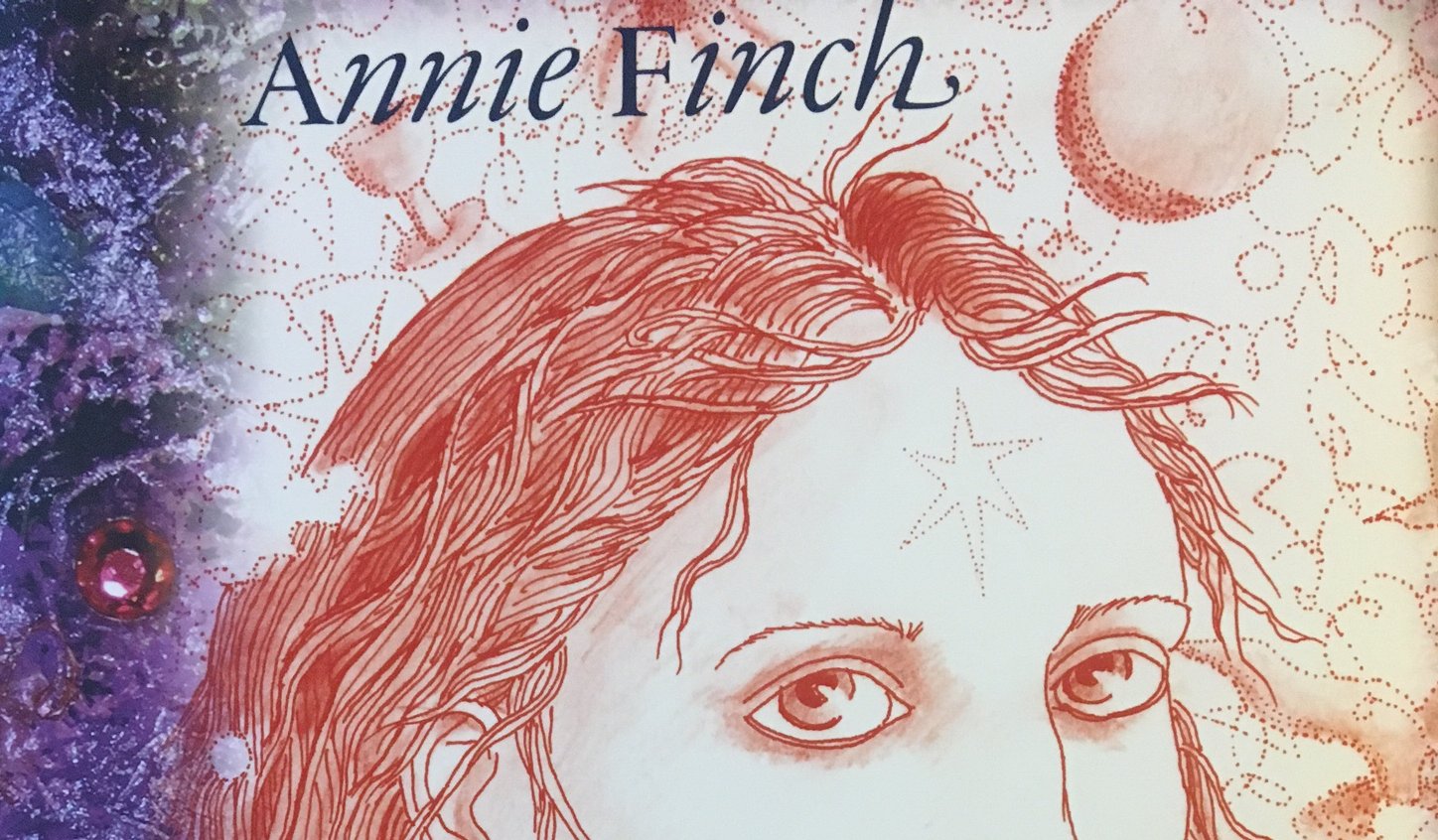
Detail of the cover of Spells: New and Selected Poems, by Annie Finch
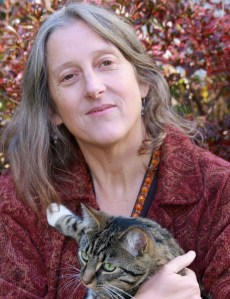
Photograph of poet Annie Finch and her cat Merlin
Annie Finch, author of Spells, and her cat Merlin

Fearless in its lyricism and expansive in its range, Annie Finch’s work spans four decades and encompasses eight books of poetry, a translation, and numerous anthologies, plays, libretti, and books and essays on poetics. The more I researched her, the more I wondered how our paths had never crossed before. Neither the poetry world nor the pagan world is all that large, and the overlap between them—pagans writing poetry with the depth and seriousness she brings to it—is even smaller. “As a Wiccan,” Finch writes in the foreword to Spells: New and Selected Poems, “I write poems as incantations to strengthen our connections to each other, to the passage of time, and to the sacred cycles of nature.” Her celebrations of the turning wheel of the year and her goddess invocations connect us with age-old traditions but root us in the present day with economic and unsentimental language. Consider these lines from “A Seed for Spring Equinox:” Continue reading “Annie Finch, Author of Spells: New and Selected Poems”

My Mother’s Instructions for How to Prepare for a Last Phone Call with a Dying Ex-Husband, by Tom Daley

Find an uncomfortable chair.
There are old letters from a bomber pilot in the South Pacific. Discard them.
Do not conjure the lemony rot in the collar of his pajama top.
Find the ear syringe behind the ice cap in the medicine cabinet.
Give up vindictive nightmares for Lent.
Try on the dead dog’s collar that hangs on a nail in the basement.
Pull all the brown leaves off the geraniums.
Apply hot compresses of clam broth to your forehead.
Research the pain indices for bone cancer generated by malignant tumors in the prostate.
Invite the children over to watch home movies, and when they arrive, take a long trip in the car.
Inquire about the current rates at the motel where you checked in the afternoon you found
the tacky, sequined lady’s cigarette case on the passenger side of the front seat of the Falcon station wagon.
Search scrap metal junkyards for the cast iron skillet you threw at him on Mother’s Day,
and missed.
Turn over the mattress.

-Tom Daley
from House You Cannot Reach: Poems in the Voice of My Mother and Other Poems, FutureCycle Press, 2015. Reprinted with permission of the poet.

Boston Area Poetry Readings for March 2016

A drift of snow edges a new drift of sand
As edges grow deeper. It’s March, month of edges.
Wet rocks yield to pebbles like opening hands.

-Annie Finch, “Beach of Edges, from Spells: New and Selected Poems.

Boston trembles on the edge of winter: one day a seductive thaw, the next that damp chill particular to the Bay State. I’ve seen green shoots in the garden, surrounded by the detritus of winter. Clear that detritus from your mind with a little poetry. All venues are in Massachusetts unless otherwise noted.

Friday, March 11, 7:30 pm
Carla Schwartz, Preston Hood, Nina MacLaughlin
Chapter and Verse
Loring Greenough House
12 South Street
Jamaica Plain
$5

Continue reading “Boston Area Poetry Readings for March 2016”

Interview with Poet Tom Daley, Author of House You Cannot Reach

Photograph of Tom Daley's Book House You Cannon Reach, displayed on a desktop with other items

I first met Tom Daley at a reading at the Zeitgeist Gallery in Cambridge, Massachusetts. I’d moved to Boston a few years before, thrilled at the rich, diverse poetry scene and itching to dive in. Unfortunately, I hadn’t factored in the years it would take to acclimate to Boston’s notoriously chilly culture, or the way that living with my girlfriend would stifle my ability to write poetry, which requires a self-knowledge and candor incompatible with my struggles to reconcile our difficult relationship.

Photograph of poet Tom Daley
Poet Tom Daley. Photo credit: Devin Altobello

A few months after I moved from Brookline to Cambridge, I began dipping my toe in the literary waters. It was then that I discovered Regie Gibson’s reading series at the Zeitgeist and met Nicole Terez Dutton, who was just about to embark on a graduate program at Brown University. Nicole was one of the featured performers — I particularly remember the persona poems about her black ancestors. Tom Daley, a thin, greying man in tweeds, epitomized the sort of intellectual one might expect to find in Concord, the land of Thoreau’s Walden Pond. He read a poem in praise of Nicole, and the warmth and intensity of the piece stayed with me for more than a decade. I recently reconnected with Tom via Facebook and was thrilled to read his new collection House You Cannot Reach: Poems in the Voice of My Mother and Other Poems, published in 2015 by FutureCycle Press. He took the time to answer some questions about his work and his life.

Continue reading “Interview with Poet Tom Daley, Author of House You Cannot Reach”