This is part of a series called Dispatches from an MFA which details my experiences in the low-residency MFA in Creative Writing program at Lesley University. In the final semester, I studied with poet Erin Belieu. We spent the semester working on my MFA thesis, which became the basis for the manuscript I began shopping in 2019. Graduating students are also responsible for teaching a seminar at their final residency. This is the cover letter to the first packet of the semester.
Dear Erin:
This month I’ve felt like I’m thrashing around in a very shallow pond. At one point I shouted, “I have no idea what I’m doing!” My partner Mark laughed and said, “It sounds like grad school.”
By the man-made lake? A hole so shallow and muddy, all the men held hands, formed a human net and walked toward each other to the center to feel for some kid who might have gone under–there,
on its shore, in the Kodak, me, in my little terry cloth bikini, all round as the moon stomach. I’d worn a Batman mask attached
by a thin rubber band all summer, my hands fisted, the nails bit crescents in my palms.
The summer of my menarche? I stood
against the lazy Susan in the kitchen and watched the President resign on the small TV: I cried because of the cramps and blood, the garter belt biting me. My mother said we’d never see this again and she was wrong:
even married to my father, she couldn’t predict the depth of a man’s rage.
A year after my abortion?
The clinic three stops down from my dorm, three quick stops on the Green Line, and no one shot there yet but escorts needed, one pink set of rosaries flung at my face.
That year, the year of Ferraro, my aunt said she wouldn’t vote for anything
that menstruated, could get pregnant, could bear a child.
– Jennifer Martelli, from In the Year of Ferraro, published by Nixes Mate, 2020. Republished with permission of the poet.
How do I tell the turtle that I am slower than he? — Pablo Neruda, from The Book of Questions
Vaster than empires and more slow – Andrew Marvell, “To His Coy Mistress”
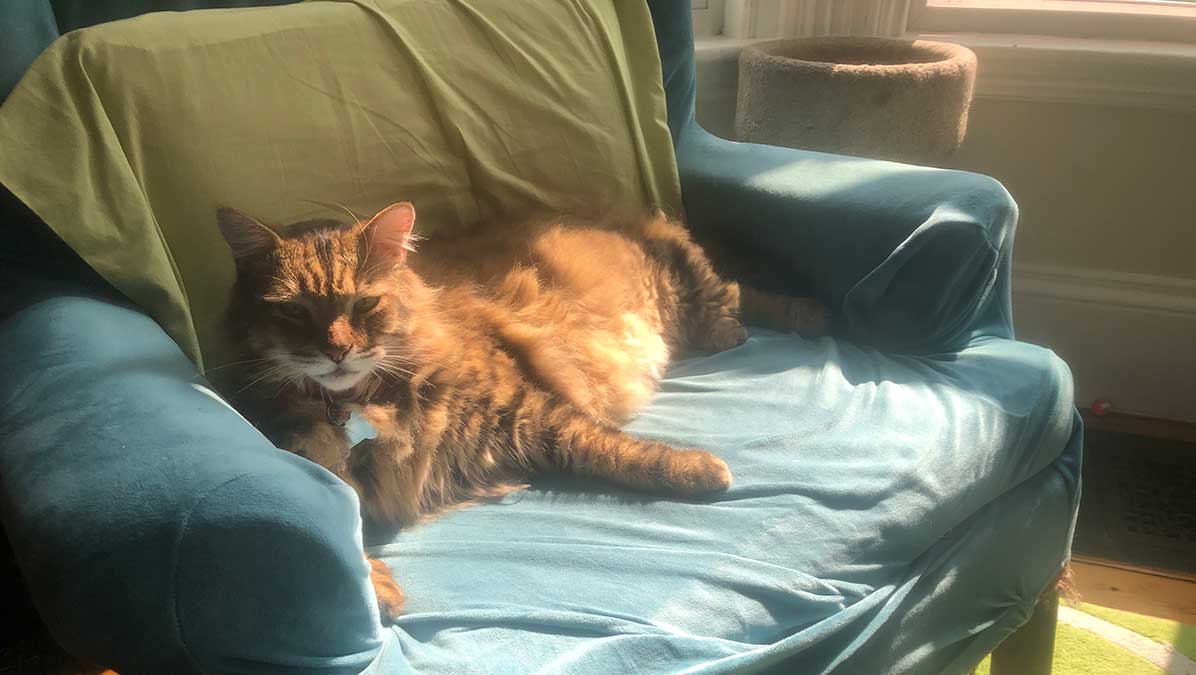
I would spend the whole day dreaming, nestled in my comfy chair, the wind making music from the wind chimes, the sun making its slow round in the window. Once, after the hospital, my husband took us to a cabin in the woods built by hippies out of old houses, and I nestled on the couch and watched the sun make its slow round over the cathedral windows, while Mark brought me oatmeal, and tea, and sandwiches. He took his snowshoes out and came back smelling of woods and winter, but I sat there and watched the window change, watched the shadows of the trees bend from one side to another and was happy.
After days and days in the comfy chair I stop being able to put on my shoes. The door develops a sort of static at its edges, an invisible field made of vertigo and fear. In summer I can venture barefoot onto the porch to sit in the sun and watch the bees and butterflies — and once a hummingbird moth — in the flowers, but the concrete tears at my tender soles, and the complicated laces of my walking shoes unravel in my hands.
Sometimes I force the laces tied, force myself outside, take those dizzying steps off the porch and trudge through the neighborhood — curiously light and not-quite-there. Now, in this our first infected winter, I have to remember my mask, and in the cold my own breath condenses clammy and chilled against my mouth and nose. Curiously light and not-quite-there, stunned at the lack of catastrophe that follows me down the sidewalk, I cross Poplar Street and pad down the footpath carpeted in wood chips to the tiny piece of conservation land my neighbor has turned into a garden. In the infected summer of 2020, she wangled a mountain of free wood chips from a tree company, and a host of donated plants from Needham, and Dover. The lot had had its beauty before, but in the summer of the plague she and her wife shoveled and dug and rolled wheelbarrows until it became something more. She’s placed educational signs: “Why let the nettle grow?,” “Why a bug house?,” “Why the rotten apples?” (which she harvested from our apple tree and rolled downhill to make good soil). Why a fairy house?
Why the buds that came last spring as doctors named the marks of COVID in the lungs “ground glass?” Why the cherry blossoms in my driveway, as millions lost their jobs and the lucky ones confined themselves to laptops, and pajamas, and InstaCart. Why a madman in the White House, driving his minions to storm the Capitol? Why the Q-Anon believers, rife for recruitment now to the Proud Boys and the Hammerskins, the Aryan Resistance and the Boogaloo. Why the virus that still rides the waves of humans’ breaths into our lungs, into our vessels, into, into, into.
Today the sun has turned to clouds and I’ve fed myself and dressed myself and done my work, and I have yet to tie my shoes and go outside. Will I? Or will I do ten jumping jacks and call it a day, nestle in my comfy chair and read my Mary Russel novels, safe in my home, lazing with my cats?
I’m happy for LGBTQ+ Catholics that Pope Francis said that monogamous, same-sex families are kinda sorta okay. Since the initial story broke, it turns out that he was endorsing civil unions while vehemently fighting gay marriage. Now that we have full marriage equality in the USA–for now, anyway–it still feels like too little too late. I was happy being a Catholic until I read the Baltimore Catechism during Confirmation classes, and until I realized exactly how conditional the Church’s “unconditional” love really was. It still pains me to think of the Franciscan Friars who treated me with such love and caring as a little girl, versus how they would have viewed my “lifestyle choices,” if I’d been brave (or stupid) enough to tell them about them. It makes me bitter to think that they’d approve my marriage to a cis man but would have condemned the other relationships I’ve been in. Those particular Friars are mostly gone now, and their political views were more conservative than many other Catholics. Those were the ones I grew up with, though.
I know there are LGBTQ Catholics out there, and I’m glad that they’re working to change the system from within. I just couldn’t reconcile myself with the Church’s basic theology (original sin, the sacraments, transubstantiation), let alone its positions on social issues near and dear to my heart. Yes, Catholics continue to do a tremendous amount to help the most vulnerable communities across the globe. Yes, they provide real spiritual succor to many, many people, including my husband, my mother, and my family in California. I’ll always have a deep grief for having to leave the Church. I’ve tried to go back to services but always end up crying in the middle of them. But it’s also a relief to have left an institution so completely out of step with my own view of the world, my concept of Divinity, and the life of the spirit.
Carol Hobbs carries herself with a quiet competence that I associate with Canadians. The fisheries collapse of the Maritimes in the 1990s forced her and many other Newfoundlanders to emigrate, but she carries her homeland with her, in her mannerisms, and in her poetry. Newfoundland, her debut full-length collection, is a testament to perseverance and an continued commitment to honing her craft. This has been a difficult year for Carol–the COVID pandemic found her scrambling to adapt lesson plans to the new realities of online learning, and she has been undergoing treatment for breast cancer. In spite of these difficulties, she found some time to talk to me via email about her craft, her book, and the writing life.
I don’t post nearly as much personal content on this site as I used to, but from time to time I feel the need to veer off the poetry path. Now is one of those times. I feel like I’ve been watching my country slowly disintegrate since 2016, but I know that the underlying conditions that have led to today’s crises far predate the Trump administration. Overpolicing of Black communities — and in particular Black men — dates back hundreds of years. The Black Lives Matter movement dates back to the Obama administration, and the George Floyd protests make it clear that we still have a lot of work to do as a country. Trump’s not-so-tacit endorsements of white supremacist groups hasn’t helped, and neither has the continually growing wealth gap. The COVID-19 crisis and its resulting effects on the economy have created even more stresses for communities of color, who have been hardest hit by them.
Creative expression is a balm in troubling times. Take some time for yourself and your work and join a writing workshop I’m hosting on Wednesday evenings (7pm to 9pm Eastern) in June. We will use all five senses and plumb our memories and imaginations to sprout seeds of new writing. A few seats remain. All genres — poetry, fiction, memoir, or combinations thereof — and all experience levels welcome. Open to teens and adults. Sign up here.
This is part of a series called Dispatches from an MFA, which details my experiences in the low-residency MFA program at Lesley University. In the third semester, I studied with poet Adrian Matejka. We spent the semester working on my craft essay, a long term paper that does a deep dive into a particular craft element–in my case, poetic line and how Adrienne Rich and Gwendolyn Brooks have influenced contemporary intersectional female poets. This is the cover letter to the final packet.
Dear Adrian:
I tend to have mixed feelings when sending in the last packet of the semester. It’s a relief to come to a break in the work. But once I’ve turned in the packet, despondence overcomes me as I realize the end of the semester means no more school for a while. School has generally been a refuge for me. And this work I’m doing has such intrinsic value that even when I’m on the edge of burnout I prefer it to my non-poetry, non-academic life. Without a school deadline, the future appears like an unbroken line of dull days clocking into my corporate job, writing status reports and functional specs, hiding my artistic side in favor of businesslike necessity.