Interview with Nicci Mechler of Porkbelly Press

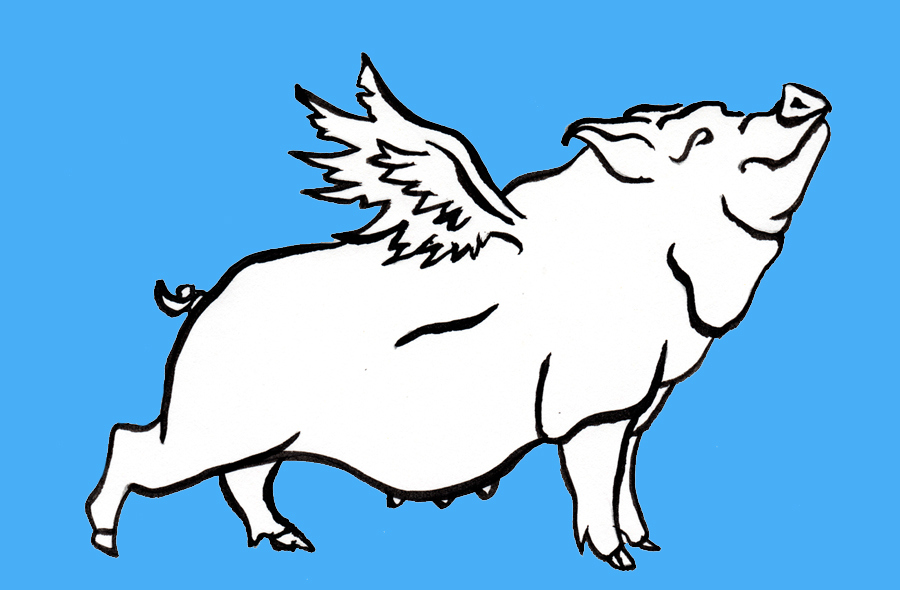
Line drawing of a pig with wings against a blue background

Chapbooks and zines from Porkbelly Press arrive tied in pastry string with a handwritten note from the editors thanking you for supporting small presses. The chapbook I purchased — Blood Knot by Suzanne Rogier — evokes a similar handmade detail, both in the object and the poems they contained. I spoke with Porkbelly publisher Nicci Mechler about the press and its creations.

What inspired you to start the press? Is there a story behind the name?

Photograph of Blood Knot by Suzanne Rogier, a chapbook from Porkbelly Press
Blood Knot by Suzanne Rogier, a chapbook from Porkbelly Press

Porkbelly Press came a year after our literary magazine, Sugared Water. I’d worked on lit mags for years, and produced zines, and my chapbook collection was growing. It seemed a natural progression to try out a chapbook line, to use my book arts and love of lit to craft some beautiful chaps. Porkbelly exists to boost the signal.
We make our home in Cincinnati, Ohio, not too far from the banks of a pretty fantastic river. Back in the days when the fathom was where it’s at, and people yelled stuff like, “by the mark twain!” (even Mark Twain himself), our architecturally-gorgeous (and besotted of beer) little burg ferried out a whole heap pork belly. We were big on pig. You can still see the evidence in 1) the city’s consumption of breakfast sausages (like goetta), and 2) the pig art and statuary all around town.

Naturally, we took that delicious callback to days gone by and smashed it into a press name; pork belly became Porkbelly and a press was born. In the words of one delightful Irishman, our “rather portly winged pig [is] a symbol of hope if I ever saw one.” Well, yes. Hope and bacon. (No bacon is harmed in the production of these chapbooks.) Continue reading “Interview with Nicci Mechler of Porkbelly Press”

Poetry Workshop Update and Field Trip

This Thursday is the penultimate workshop of the fall term. I’m really pleased with how the group has come together. I have a nice core of participants who have been there since the summer but also have room for new people. I’m also getting more confident in developing a model that differs from other workshops I’ve attended.

dreamstime_head_tree_logo_72dpiThe metaphor of a garden of words really applies here. With its focus on positive feedback to new drafts, Toni Amato’s workshop is a wonderful place to nurture seedlings. With its focus on poetic technique and ruthless revision, Barbara Helfgott Hyett’s workshop is excellent place to thin and harden those seedlings. My vision is to create a hybrid of those two models: to develop both fluency and objectivity when looking at our work.

In earlier sessions we focused primarily on sprouting new seedlings. Germination happens through free-writes, the use of different writing prompts, and a close reading of a “host poem” — one which I feel has something to teach us about technique or language. We give first drafts written in workshop nothing but positive feedback  Now that we all seem to have developed a greater level of confidence — both in ourselves and in each other — I’ve asked people to start bringing printouts of more finished drafts. Something happens when you transfer a poem from longhand to type. I almost always end up revising as I go. Seeing it in print also gives me emotional distance. We’ve begun critiquing one another’s drafts, but in a manner that I hope is gentle and supportive. Other members of the workshop seem to appreciate this second phase of the poem-growing process.

If first and second (and third, and fourth, and fifth, and more) drafts grow a poem from scratch, the poem finally bears fruit with publication. It can be hard to keep all three balls in the air at the same time. I find that I usually fluctuate between creating and revising my work and sending it out for publication. Starting in January I made a concerted, consistent effort to send out my work and got much better results than I expected. I’ve given my students a few pointers on where they can find open calls, but the focus of workshop right now is still on creation and revision. I’m curious to see how that might grow and change in future sessions. In the meantime, I continue to be humbled by how much I learn myself while facilitating workshop. Artists really do develop in tribes, just like Julia Cameron says. I’m happy to be following in the footsteps of my teachers by creating one of my own.

Our small tribe will be taking a field trip to the Chapter and Verse Reading Series this Friday, October 9 at 7:30. The Jamaica Pond Poets are talented and welcoming bunch. I look forward to both the featured readers and the open mic that follows.

Poetry Reading: Small Animal Project this Friday October 2 in Cambridge, MA

Stephanie Ford, Kevin McLellan, Annie Won

Small Animal Project invites you to its first fall reading, featuring Stephanie Ford, Kevin McLellan, and Annie Won.

Outpost 186
186 1/2 Hampshire Street
Cambridge, MA
Friday, October 2
8:00 pm (doors open at 7:45)

About the readers 

STEPHANIE FORD is the author of All Pilgrim, forthcoming from Four Way Books in 2015. Her poems have appeared in Boston Review, Fence, Tin House, Harvard Review, Gulf Coast, and many other journals. Originally from Boulder, Colorado, she now lives in Los Angeles.

KEVIN MCLELLAN is the author of Tributary (Barrow Street) and the chapbook Round Trip (Seven Kitchens), a collaborative series of poems with numerous women poets. The chapbook Shoes on a Wire (Split Oak Press) and the book arts project [box] (Small Po[r]rtions) are both forthcoming. THRUSH Poetry Journal and The Journal of Compressed Creative Arts nominated his writing for the Pushcart Prize. Kevin has taught poetry workshops at the Cambridge Center for Adult Education and at the University of Rhode Island.

ANNIE WON is a poet, yoga teacher, and medicinal chemist. She is a Kundiman Fellow and a Juniper Writing Institute scholarship recipient. Her chapbook with Brenda Iijima,Once Upon a Building Block, was recently published with Horse Less Press (2014) and individual chapbook, so i can sleep, is forthcoming from Nous-Zot Press (2015). Her work has appeared in or is soon to appear in the following venues: New Delta Review, Entropy, Delirious Hem, TheThePoetry, TENDE RLION, Similar:Peaks::, and others. Her critical reviews can be seen at American Microreviews and Interviews.

Directions

Outpost 186 is located on Hampshire Street, between Prospect & Amory streets. There’s metered parking on both Hampshire & Cambridge streets, as well as permit parking on the side streets nearby.

The closest T stop is Central Square on the red line. Exit station & walk up Prospect 0.5 miles to Hampshire Street (intersection with 7-Eleven & Hess). Take a left onto Hampshire. Take first left onto path just behind 7-Eleven & walk to the brown shingled house behind another (bigger) brown shingled house.

The 83 and 91 buses run from Central Square & stop at the intersection of Prospect & Hampshire.

The 69 bus runs between Lechmere & Harvard Square, with a stop at the intersection of Cambridge & Hampshire, just in front of 1369 coffee shop.

Contact/Other

Jessica Bozek at smallanimalproject@gmail.com
See also http://smallanimalproject.tumblr.com/readings

——————————–

Editor’s Note: This notice is re-posted from the Small Animal Project email newsletter. To subscribe, email Jessica Bozek at smallanimalproject@gmail.com.

“Grief Ambition Knot of Self” Published in the Fall 2015 Issue of Snapdragon: A Journal of Art and Healing

My poem “Grief Ambition Knot of Self” appears in the Fall 2015 issue of Snapdragon: A Journal of Art and Healing. Many thanks to Jacinta White for her work on The Word Project and Snapdragon.

grief, ambition, knot of self that won’t untangle, fear of my own
banked fires, caught between frost and sunshine, caught between

Read the entire poem here

Boston Area Poetry Readings for September and October 2015

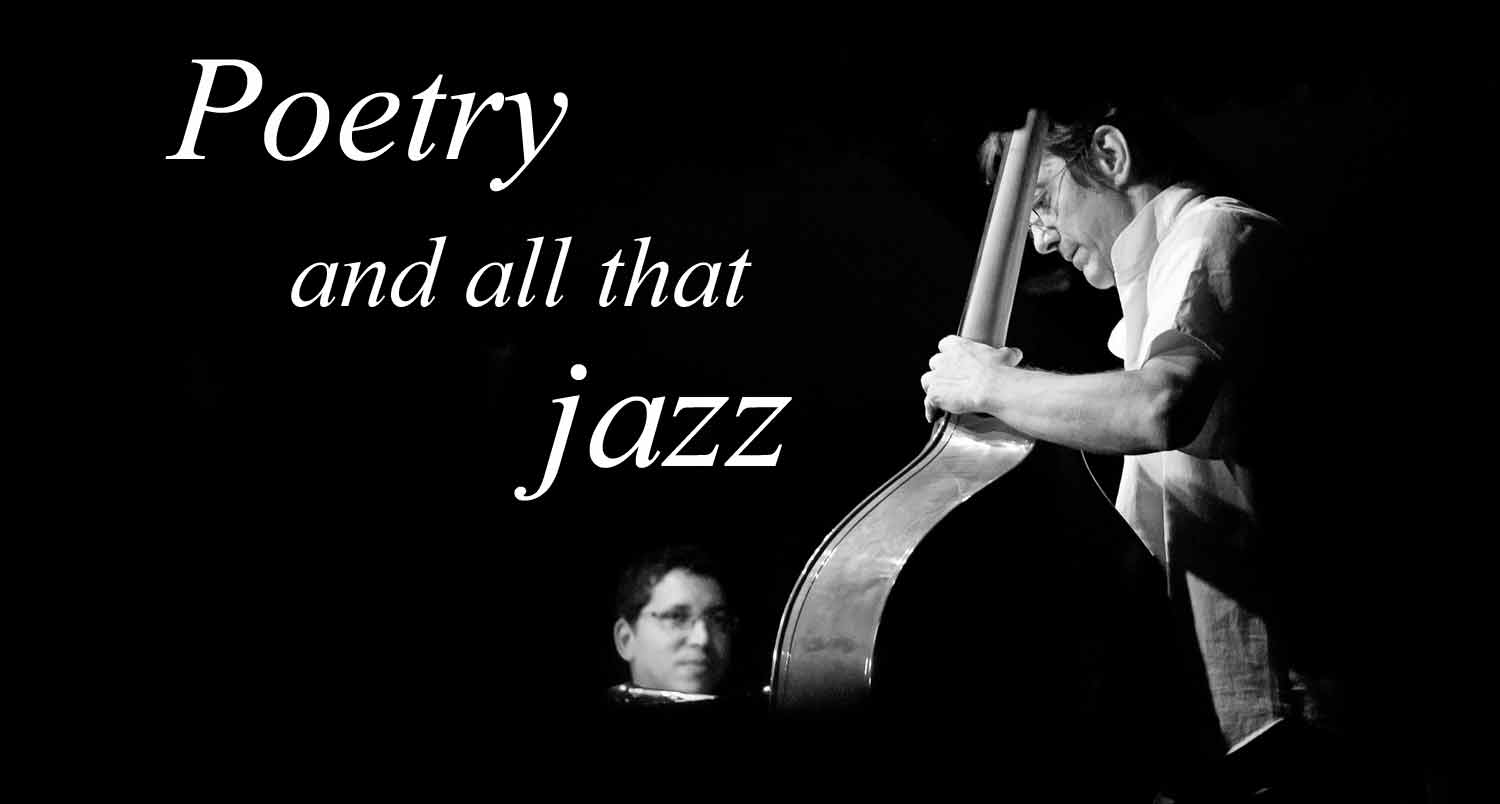
Poetry and all that jazz

Poetry readings lie thick as apples on the ground this time of year. Be sure to check out some mainstays of the Boston poetry scene: Tom Daley, Jill McDonough, and Doug Holder to name a few. Commemorate 9-11 with the BASH reading series put on by Black Ocean Press, one of the hippest scenes in town. Or catch Daniel Bouchard — the  gentleman who sends out these listings via email — at Harvard just before Halloween.

If you’re in the mind to write some poetry of your own, consider attending my poetry workshop which runs every other Thursday this September and October. We’ll hit the open mic at the Chapter and Verse reading series in October, so come along if you’d like someone to cheer you on.

Thursday, September 10, 6 pm
“Performing Democracy: Private Citizens on the Public Stage”
Poet Edward Hirsch leads a discussion including playwright Rebekah Maggor, director and translator Bryan Doerries, and BC Law Professor Frank J. Garcia (presenting the work of James Boyd White), on theater’s vital role in enacting the questions and values that nourish and sustain democracy.
Clough Center Series on the Arts and the Culture of Democracy
Boston College
Devlin 101
Chestnut Hill, MA
Free

Continue reading “Boston Area Poetry Readings for September and October 2015”

Interview with Carolina de Robertis, author of The Gods of Tango

In her new book The Gods of Tango, bestselling author Carolina de Robertis weaves together a story addressing the issues of race, class, immigration, and sexuality as beautifully as the tango weaves together the music of Argentina’s many immigrant communities. In language musical and brutal by turns, de Robertis tells the story of Leda, a young Italian immigrant who passes as a man in order to pursue her dream of becoming a tango musician. Along the way, we learn the back stories of many other characters and the obstacles they overcome — or fail to overcome — as their lives intersect with Leda’s. de Robertis took some time out of her busy schedule to talk with me about her work.

Image of a woman with long hair and red lipstick wearing a red sleeveless shirt.
Carolina de Robertis, author of The Gods of Tango

What inspired you to write this book and what sort of research did you need to do to write it?

I began with the seed of my own great-grandmother’s immigration experience, from Italy to Argentina. I quickly saw, however, that from that seed I wanted to grow a much larger story, not only about the great migration of that time to South America, but also about the rich cultural history of the tango’s origins, and about female transgression into an underworld of men.

I did a huge amount of research. I scoured libraries and bookstores, read piles of books in English, Spanish and Italian (badly), walked the streets of Buenos Aires and Montevideo and Naples and my ancestral village in Italy, took tango dance lessons and violin lessons, and consulted with all sorts of experts, from musicologists and musicians to friends on the transgender spectrum. Continue reading “Interview with Carolina de Robertis, author of The Gods of Tango”

Boston Area Poetry Readings for August and September 2015

Back-to-school season is upon us, which means that Daniel Bouchard is once again sending around notices of poetry readings in Boston, Massachusetts and environs. Last weekend was the annual Boston Poetry Marathon at Outpost 186 in Cambridge. Get advance notice of next year’s marathon on their Tumblr site.

On a related note, the fall term of my poetry workshop in Roslindale begins in late September. Fill out the contact form on this page for more details.

Tuesday, August 18, 7 pm
Myles Gordon, Tomas O’Leary, and Marieve Rugo
First and Last Word Poetry Series
Center for the Arts at the Armory
191 Highland Ave.
Somerville, MA
$4

Wednesday, August 26, 7 pm
Tomas O’Leary and Greg Delanty
Seamus Heaney Tribute Reading
The Hastings Room
First Church Congregationalist
11 Garden Street
Cambridge, MA

Continue reading “Boston Area Poetry Readings for August and September 2015”

Literary Pursuits or Lack Thereof

I try to cut myself a break in the summer. It’s natural to slow down a little when the weather is hot and the sun is plentiful. And while I’ve spent plenty of time sitting in the garden and bobbing in the ocean, I’ve also been keeping my hand in the game. Here’s what I’ve accomplished so far this summer:

  • Started a poetry workshop that ran from late June to early August. The next term starts in September. I’m in the early stages of publicizing it.
  • Submitted individual poems to an average of five publications or contests a week and had five pieces accepted. I expect a 20:1 ratio of rejections to acceptances, so this is better than expected. Twenty-one other journals are still reviewing my submissions on Submittable.
  • Sent my manuscript Mad Quick Hand of the Seashore to a few different small presses, some of which were running contests.
  • Published two articles over at Gender Focus. The most recent is an essay about Princess Leia, my first feminist role model. Yes, I like science fiction. Don’t judge me. I’ll repost it here once it’s been up on Gender Focus for a while.
  • Typed and revised at least a few poems.
  • Started the MFA application process. Even though I don’t plan to start a program until summer of 2016, one of the programs I visited asked me to start a file with them now. In spite of my chops, I found filling out the initial application form incredibly daunting. It took me about three weeks to send it in.
  • Finished a review copy of Tawnysha Greene’s gorgeous and devastating new novel A House Made of Stars. I’m in the process of conducting an author interview.

Maybe that’s enough.


Interview with Alexandra Delancey, Author of Lesbian Romance Always Her

Always Her, by Alexandra Delancy

Alexandra Delancey’s novellas Always Her and Me and Her chronicle the love story between newly-out Elise and ultra-cool tomboy Jack. I caught up with Alexandra recently to talk with her about her characters, her craft, and the business of publishing in the age of e-books.

Your characters are well-drawn and idiosyncratic, especially some of the more minor ones like Tatiana, Christie, and Alyssa. How did your own experience of the lesbian scene inform these characters?
That’s really nice to hear. I didn’t base any of them on individual people that I know, but I wanted to reflect the experience of being in your early twenties and being gay, or thinking that you might be gay, and the insecurities and preconceptions that sometimes accompany it. I spent my twenties discovering the lesbian scenes of several countries, and they all have their own norms and cliques. They can be frustrating at times, but they’re a lot of fun too. What I’ve always loved about the scene is that it gives you an opportunity to meet a much broader cross section of people than you otherwise might, so I tried to make my characters diverse in order to reflect that.

Tell me more about how the characters of Jack and Elise evolved.
I like writing tomboyish characters. Continue reading “Interview with Alexandra Delancey, Author of Lesbian Romance Always Her”

Summer 2015 Poetry Workshop Is Off to a Great Start

The first session of the new poetry workshop was even more successful than I’d hoped. Turnout was better than expected: just enough people to fit comfortably in my living room. I start each session with a simple exercise that sets an intention for the evening — that we support one another in the creation of new work. Then we have a grounding exercise followed by a free write. The first free write follows the tradition of Julia Cameron’s morning pages, a sort of throat-clearing, a flushing of the pipes. Achieving that flow state is such an important part of writing, and even more so when it comes to poetry. There’s something about longhand writing that makes this flow state come very naturally. I asked people to pick an object in the room and to use it as a jumping-off point for their writing. When we were finished, we didn’t share the work — we just moved on.

We followed this exercise with a close reading of Julie Ebin’s “Dear Dad,” a poem originally published in Solstice Magazine. In close reading, we go through a poem line by line, word by word, in an effort to see what makes the poem work. I chose Ebin’s poem for its tight wording and surprising turns of phrase — two essential components of good poetry. One of the lovely things about close reading is that other members of the workshop invariably call attention to details I don’t notice myself during my first or second read.

I used a line from Ebin’s poem — “I will try to unlearn dust” — as our second prompt. We wrote for five minutes only, since I find that time limits help me to write without overthinking. At this point I introduced my two basic rules of workshopping new poems:

  • Feedback must be exclusively positive in nature. Focus on what works in the poem rather than on what you didn’t like or what you would change.
  • Refer to the “I” in the poem as “the speaker” or “the narrator.” This creates some emotional distance from the work and allows the writer to see the piece more objectively.

Toni Amato’s workshop also includes two other rules:

  • No apron-wringing, or protestations that your piece is no good. The term comes from the idea of someone who has just baked a pie and is wringing her apron while her family tries it for the first time. I didn’t specifically ban the practice in our first workshop, although I’m considering doing so for future sessions, since it does color the perception of the work.
  • No comparing someone’s work to a published author, as in “This piece reminds me of Herman Miller.” What might be considered a compliment may come across as an insult, depending on how the writer perceives the other author.

The results of the prompt were pretty fantastic. I’m always amazed at how many different poems result from the same prompt.

After a short break, I used my box of postcards for our final prompt. Over the years, I’ve amassed quite a collection of interesting images, many of them sent by a pen pal who found my site more than 20 years ago. I pass these around to members and invite them to write something inspired by the image or words on the postcard. Once again, the results were varied and fantastic.

At the end of the workshop I had that wonderful, expansive feeling of endless possibility that follows a creative act with like-minded people. We meet again on Thursday July 9 from 7pm to 9pm. After that are two more sessions: Thursday July 23 and Thursday August 6. Once the group establishes trust in one another, I plan to have people bring in more finished pieces for constructive criticism. And I’ll be sending out information on how to find calls for submission — poetry isn’t meant to molder in a desk somewhere, and it’s easier to go through the submission process with others.

If you’re interested in attending future sessions, you can fill out the form on this page for more details.