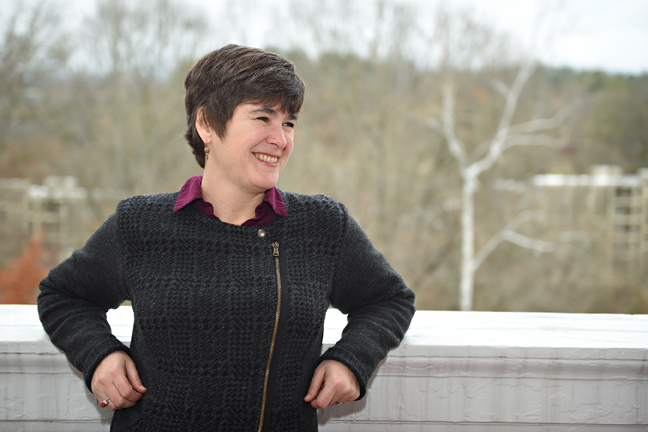
Abortion Spell, by Annie Finch

Let’s keep the world through its own balanced kiss,
the kiss come from women made of our own blood,
the holder, the cooler (redeeming the earth,
shaping the room where we give you your birth).
Hands born of woman will not stop this flood,
this generous, selfish, long-opening gift

— Annie Finch

from Spells: New and Selected Poems. Wesleyan University Press, 2013. Reprinted with permission of the poet.

Read an interview with Annie Finch here.

Late February and March 2016 Boston Area Poetry Readings

It’s a balmy 50 degrees in Boston, which means that this evening we’ll have a rainstorm instead of a blizzard. April may be the cruelest month in England, but February is full of spiteful surprises in Boston. Still, the snowdrifts barely reach our knees and the days are growing exponentially longer. Celebrate with some poetry and some hot tea, while it’s still in season. All readings are in Massachusetts unless otherwise specified.

Saturday, February 20, 6:30 pm
Pablo Medina, Jennifer Barber, Eleanor Goodman, and Sam Cha
reading original works and new translations
Us & Them: Boston
Arts @ the Armory Cafe
191 Highland Ave #1A
Somerville

See all listings

Boston Area Poetry Readings for February 2016

Imbolc has come and gone and the days are getting longer. Celebrate the first stirrings of spring with a little poetry. Below are updated listings for February 2016 poetry readings in Boston, Massachusetts and environs. All readings are in Massachusetts unless otherwise noted.

Friday, February 5, 7 pm
Jen Grow, Kathy Flann, and Gint Aras
Out of the Blue Art Gallery Too
541 Massachusetts Ave.
Cambridge
See more listings

Boston Area Poetry Readings for January and February 2016

January always feels like a holiday hangover to me. So far, the temperatures are bracing cold and the skies clear — two good signs after last February’s record snowfalls. Please Skadi, send us enough snow for snowshoeing and not enough for epic shoveling. Daniel Bouchard sets us back on the path of poetry with the listings below. All locations are in Massachusetts (USA) unless otherwise noted.

My poetry workshop in Roslindale, MA also reconvenes in February. Priced for starving poets, focused on generating new work.

Friday, January 8, 7:30 pm
Dan Johnson, Deborah Melone, and Jan Schreiber
Chapter and Verse
Loring-Greenough House
12 South Street
Jamaica Plain Centre

Saturday January 9, 3 pm
Elizabeth J. Coleman and David Berman
Powow River Poets Reading Series
Newburyport Public Library
94 State Street
Newburyport, MA
Free and open to the public

Continue reading “Boston Area Poetry Readings for January and February 2016”

Cultural Appropriation and Fair Use

When the 2015 collection of Best American Poetry came out this September, the poetry world erupted into controversy. At the crux of the matter was a poem titled “The Bees, the Flowers, Ancient Tigers, Poseiden, Adam and Eve” by Michael Derrick Hudson. Why all the fuss? Because Hudson, a white man, published his poem under the pen name Yi-Fen Chou. Hudson claimed that he was unable to find a publisher for his poem until he began sending it out under an Asian pen name (1). Asian poets and writers were understandably upset when the anthology came out and it’s sparked a discussion among academics and poets about the nature of cultural appropriation and the myth of reverse racism. Editor Sherman Alexie responded to the controversy in an article posted on the Best American Poetry blog. His thoughtful essay addresses the tension between the literary world’s desire to showcase diverse voices and the necessity of remaining faithful to aesthetic principles:

“If I’d pulled the poem then I would have been denying that I was consciously and deliberately seeking to address past racial, cultural, social, and aesthetic injustices in the poetry world.

And, yes, in keeping the poem, I am quite aware that I am also committing an injustice against poets of color, and against Chinese and Asian poets in particular.

But I believe I would have committed a larger injustice by dumping the poem. I think I would have cast doubt on every poem I have chosen for BAP. It would have implied that I chose poems based only on identity. (2)”

My own experiences as a queer woman and my friendships with people of a variety of races and nationalities have sensitized me to the issue of cultural appropriation. So what is cultural appropriation? It’s overwriting the voices of the voiceless with narrative constructed outside of the lived experience of a person who is a member of an oppressed class. Since there are many kinds of oppressed classes and since one person can belong to more than one of them, the issue can become complicated. The litmus test for me goes back to the question of lived experience. Does the person telling the story have the right to tell it? Is it his story to tell? As with many questions, there is no one right answer, but there are definitely some wrong ones.

Continue reading “Cultural Appropriation and Fair Use”

“The Kitchen Poem” in the Summer 2015 Issue of Dirty Chai

This spring I was delighted to learn that “The Kitchen Poem” had found a home at Dirty Chai Magazine. I missed the issue when it came out, so here it is now. Here’s a PDF download of the Summer 2015 Issue of Dirty Chai.

And since it’s more 90 days since it appeared there, here’s a reprint:

The Kitchen Poem
for Adrienne Rich

A kitchen is where a woman belongs sometimes
not because I should cook for you

but because here when one sits at the table
with a bowl of something one realizes
what it is to slow down

Because here there is always food
and yet I can go hungry

Because there is a smell of things cooking,
and the smell is good.

Because I can spread tablecloths
and be unmolested.

Because God loves a kitchen
and I feel powerful here.

Because a kitchen is where civilization began.

Because some men are shy of the kitchen
and those men I can do without.

Because kitchens come in many shapes and sizes.

Because Allen Ginsberg never wrote a poem about a kitchen.

Because in a kitchen, a woman can take what has been
dismembered,
                        forgotten
                                             and remember it.

Because in a kitchen we put things together
that have been cut apart
and call it food.
Interview with Poet Lesley Wheeler, Author of Radioland

Photograph of poet Lesley Wheeler

A much-decorated poet and academic, Lesley Wheeler’s accolades include a Fulbright scholarship, an NEH grant, the Barrow Street Poetry Prize, the James Tiptree, Jr. Award Honor List, and publication in many prestigious journals, including Poetry and Slate. She teaches English at Washington and Lee University and is an active member of the WOM-PO Listserv, an email discussion group for women poets that’s been around since before blogging and social media overtook online community platforms like Listservs. Her third book of poetry, Radioland, came out in October 2015. In spite of her rise to fame in recent years, Lesley remains a warm and generous correspondent. She took the time to answer some questions about her latest book, the po-biz, and the difference between writing and publishing.

Cover image of Lesley Wheeler's third book of poetry, Radioland
Radioland, Lesley Wheeler’s third book of poetry

You’ve gotten a lot of recognition for your work in the past few years. How have these changes in your career affected your writing?

It’s funny how happiness works—successes don’t warm you for long but difficulties worry you constantly. The life change came with my first two books, Heathen in 2009 and Heterotopia in 2010. Suddenly I felt able to call myself a poet. After the Barrow Street Press Poetry Prize, people seemed to take my work more seriously. The judge, David Wojahn, is highly respected by other writers, and that made a difference. “Fulbright” is a magic word—as well as representing an amazing opportunity—but I won that for scholarly, not poetic, research. My scholarly credentials remain fancier than my poetic ones and the two networks have surprisingly little overlap. In fact, having a foot in both worlds invites suspicion from both sides.

Continue reading “Interview with Poet Lesley Wheeler, Author of Radioland”

Interview with Nicci Mechler of Porkbelly Press

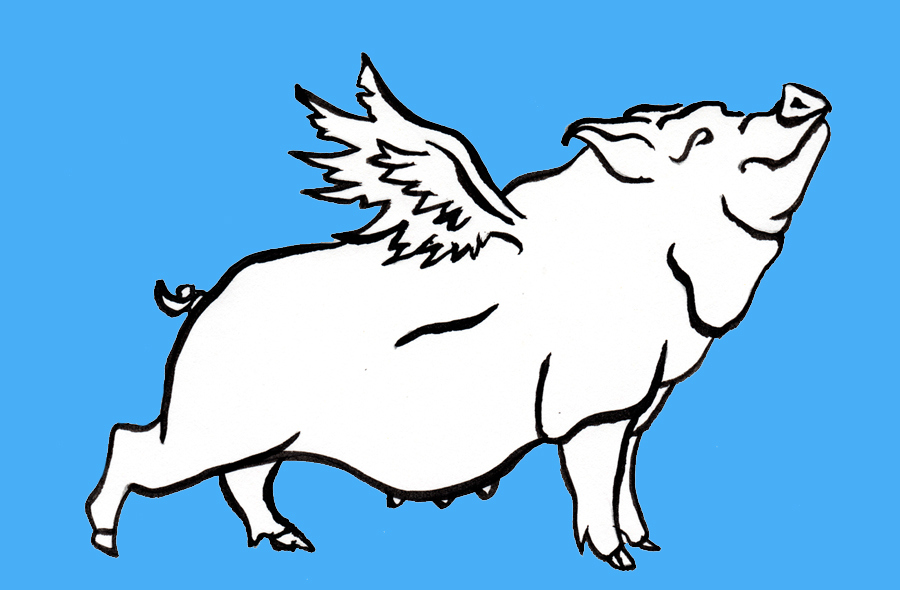
Line drawing of a pig with wings against a blue background

Chapbooks and zines from Porkbelly Press arrive tied in pastry string with a handwritten note from the editors thanking you for supporting small presses. The chapbook I purchased — Blood Knot by Suzanne Rogier — evokes a similar handmade detail, both in the object and the poems they contained. I spoke with Porkbelly publisher Nicci Mechler about the press and its creations.

What inspired you to start the press? Is there a story behind the name?

Photograph of Blood Knot by Suzanne Rogier, a chapbook from Porkbelly Press
Blood Knot by Suzanne Rogier, a chapbook from Porkbelly Press

Porkbelly Press came a year after our literary magazine, Sugared Water. I’d worked on lit mags for years, and produced zines, and my chapbook collection was growing. It seemed a natural progression to try out a chapbook line, to use my book arts and love of lit to craft some beautiful chaps. Porkbelly exists to boost the signal.
We make our home in Cincinnati, Ohio, not too far from the banks of a pretty fantastic river. Back in the days when the fathom was where it’s at, and people yelled stuff like, “by the mark twain!” (even Mark Twain himself), our architecturally-gorgeous (and besotted of beer) little burg ferried out a whole heap pork belly. We were big on pig. You can still see the evidence in 1) the city’s consumption of breakfast sausages (like goetta), and 2) the pig art and statuary all around town.

Naturally, we took that delicious callback to days gone by and smashed it into a press name; pork belly became Porkbelly and a press was born. In the words of one delightful Irishman, our “rather portly winged pig [is] a symbol of hope if I ever saw one.” Well, yes. Hope and bacon. (No bacon is harmed in the production of these chapbooks.) Continue reading “Interview with Nicci Mechler of Porkbelly Press”

Poetry Workshop Update and Field Trip

This Thursday is the penultimate workshop of the fall term. I’m really pleased with how the group has come together. I have a nice core of participants who have been there since the summer but also have room for new people. I’m also getting more confident in developing a model that differs from other workshops I’ve attended.

dreamstime_head_tree_logo_72dpiThe metaphor of a garden of words really applies here. With its focus on positive feedback to new drafts, Toni Amato’s workshop is a wonderful place to nurture seedlings. With its focus on poetic technique and ruthless revision, Barbara Helfgott Hyett’s workshop is excellent place to thin and harden those seedlings. My vision is to create a hybrid of those two models: to develop both fluency and objectivity when looking at our work.

In earlier sessions we focused primarily on sprouting new seedlings. Germination happens through free-writes, the use of different writing prompts, and a close reading of a “host poem” — one which I feel has something to teach us about technique or language. We give first drafts written in workshop nothing but positive feedback  Now that we all seem to have developed a greater level of confidence — both in ourselves and in each other — I’ve asked people to start bringing printouts of more finished drafts. Something happens when you transfer a poem from longhand to type. I almost always end up revising as I go. Seeing it in print also gives me emotional distance. We’ve begun critiquing one another’s drafts, but in a manner that I hope is gentle and supportive. Other members of the workshop seem to appreciate this second phase of the poem-growing process.

If first and second (and third, and fourth, and fifth, and more) drafts grow a poem from scratch, the poem finally bears fruit with publication. It can be hard to keep all three balls in the air at the same time. I find that I usually fluctuate between creating and revising my work and sending it out for publication. Starting in January I made a concerted, consistent effort to send out my work and got much better results than I expected. I’ve given my students a few pointers on where they can find open calls, but the focus of workshop right now is still on creation and revision. I’m curious to see how that might grow and change in future sessions. In the meantime, I continue to be humbled by how much I learn myself while facilitating workshop. Artists really do develop in tribes, just like Julia Cameron says. I’m happy to be following in the footsteps of my teachers by creating one of my own.

Our small tribe will be taking a field trip to the Chapter and Verse Reading Series this Friday, October 9 at 7:30. The Jamaica Pond Poets are talented and welcoming bunch. I look forward to both the featured readers and the open mic that follows.