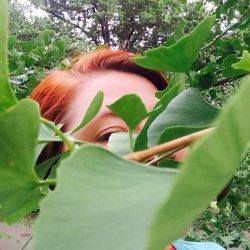
sun descends into
the leaves of the maple trees
and sets them aglow
Boston Area Poetry Readings for October and November 2016
Poetry readings in Boston and environs abound well into November this year. Of special note: a celebration of Latin American Poetry at the Center Communities of Brookline on Sunday, October 16; Liz Janick and Grey Held at Newtonville Books on Monday, November 7; and three evenings in a row of readings at the Granoff Center for the Arts in Providence, Rhode Island.
Full listings follow.
Continue reading “Boston Area Poetry Readings for October and November 2016”
Rafael’s Question, by Carla Drysdale
My son carries the name
of the healing archangel. He
sits on my lap, at the computer’s
luminous screen. We look at photos
of my parents, divorced
when I was two. Their faces
sagging, eyes hopeful.
Still alive, but their visits to us
number less than a handful
in his five-year-old life.
Sometimes, after brushing our teeth
he’ll say, “Mom, make it like a river.”
And I’ll cup my palms together
under running water, and he’ll drink.
Tonight as we sit together
I’m silent, because it’s hard to explain.
He asks,” “Do you still love them?”
So gently, so gently.
— Carla Drysdale, from Inheritance, published by Finishing Line Press. Republished with permission of the poet.
Photo credit: Daniel Padua via Flickr, Creative Commons License 2.0.
Interview with Poet Carla Drysdale, Author of Little Venus and Inheritance
Carla Drysdale’s work explores difficult subjects such as childhood abuse and sexual exploitation with tight, lyrical nuance. Little Venus, Drysdale’s first book of poetry, came out in 2009 from Canadian publisher Tightrope Books. As often happens when poets create a persona, Drysdale’s Little Venus tells truths and makes assertions far bolder than another speaker might be able to.

Her work has appeared in numerous publications, including Paris Press, Cleaver Magazine, and PRISM. Her poem, “New Year’s Eve” was set to music by American Pulitzer-prize winning composer David Del Tredici. Her many accolades include writing residencies at the Virginia Center for the Creative Arts and La Porte Peinte in Noyers-Sur-Serein, France, as well as PRISM International’s Earle Birney poetry prize for her poem “Inheritance.” Finishing Line Press released her chapbook of the same name in early 2016.
A statuesque woman with a mass of curly auburn hair, she took some time out from her busy schedule as a communications consultant and mother of two to speak with me about her poetry.
What first brought you to poetry?
Poetry first came to me, I suspect, in my pre-verbal state, in lullabies sung by my mother, grandmother, and babysitters, as well as radio jingles and birdsong. My maternal grandmother was fond of reciting everything from Shakespeare to her own variation on Fuzzy-Wuzzy –- I learned from her how to play with language as a toddler. The King James version of the Holy Bible was tremendously important to me as a pre-teen and younger teen. The first time poetry actually stabbed me Continue reading “Interview with Poet Carla Drysdale, Author of Little Venus and Inheritance”
Autumn Closing In Haiku
the wind in the trees
rewards me for walking with
one turkey feather
Breathless Woods Haiku
in the breathless woods
I hear the treetops rustling
and I am at peace
Housework vs the Springhill Mine Disaster
after Richard Brautigan
When I clean the house
it’s like a mine disaster.
I think of all the poems
trapped inside me
How I Became an Historian: Review and Interview with Poet Penelope Schott
Veteran poet Penelope Schott’s latest offering, How I Became an Historian, traces a spiral from innocence into an abusive marriage, and out again into wisdom and forgiveness. Three slug poems serve as markers on this switchback trail. In “Pestering the Slug,” the first poem of the book, she recounts something almost all of us remember: the small child’s delight in harassing bugs. “I briefly understood / the unblameable charm of evil,” she writes.
That evil coalesces but also turns to remorse in “Glory is Reached by Many Routes,” when the speaker spends “a whole morning trying / to press a brown slug through a wire sieve / and all afternoon apologizing to the slug.” That remorse turns to redemption in “Keeper.” Here, the speaker keeps the slug for a week, feeding it
Continue reading “How I Became an Historian: Review and Interview with Poet Penelope Schott”
Impatient with the Body Haiku
waking and trembling
trying to write anyway
nothing is easy
At What Price Poetry?
A fellow poet recently had the courage to complain about the expense of our chosen vocation. It’s a sad fact that the net proceeds for poets are usually negative. We often have to pay to develop our craft and get ourselves read. Perhaps it’s not unlike many art forms in this way — especially the “fine” arts like ballet. In the case of poetry, schools, workshops, conferences, book tours, and contest fees all add up. Those of us who publish books may end up making little or nothing on them. Readings at most venues don’t offer remuneration, while the poet usually ends up having to pay for gas and dinner. If you sell a few books, you’re lucky to break even.
Payment — or lack thereof — is difficult subject to speak about in public settings, partly because of the unspoken taboo on discussing money matters at all, and partly because of the notion that artists must do what they love for free, or have to suffer for their art, living in garrets and shivering next to wood stoves. It’s easy to sound bitter, and no one wants to publish — or read — a bitter poet. It is possible to make a living as a writer of prose, but not with poetry. Not in American society, where most mentions of poetry in mainstream society joke about how awful it is to have to listen to it.
This double bind is why I went into web development in the mid 1990s. I didn’t have parents who could support me or supplement my income and I didn’t have the connections that make it so much easier to break into publishing. Zines and websites used to circumvent the snooty literary establishment, but the fact is that my education and inclinations have given me champagne taste when it comes to literature in general and poetry in particular.
After 20 years in an industry that’s taken me further and further away from my literary roots, I’m embarking on a low-residency MFA program that will allow me to keep my job while I focus on honing my craft in my off-hours. An MFA is not cheap. I was fortunate enough to qualify for a merit scholarship, but I’ll be paying for the bulk of tuition with student loans. Once I graduate, my monthly payments will equal about half of mortgage. Worst case scenario is that I end up saddled with so much debt that means I can’t afford to make a career change more in line with my passions.
All of that being said, I do believe there are bright spots in the cloudy future. Grants do exist. Paying gigs (mostly teaching, but also prose writing) do exist. Scholarships do exist. Free artist residencies do exist. Lesley awarded me a scholarship and I’ve won awards in the past so I know it’s a possibility for me. The key is to not get sucked in to the maw of the pay-for-play mentality of some literary circles. And that’s hard because sometimes the people in those circles are the poets I really admire and want to be like.
I’ve spent so much time avoiding dedicating myself to the arts because I’ve been too afraid of failure. I’m taking the leap this time — or, more accurately, I’m taking a measured, clear-eyed walk along a rocky and difficult path that hugs the side of the mountain.
Succeeding in the end might require a revision of my definition of success into outcomes I can directly affect rather than those that depend on the whim and tastes of judges and editors. When I look at it that way, success is inevitable.
Photo credit: slgckgc via Flickr, CC 2.0
 Garden of Words