Mom Egg Review posted a blurb about my book in their last issue, and then this full-length review from Jiwon Choi most recently. Her thoughtful examination of my work made me feel seen. Here’s one excerpt:
Here the frayed lives of troubled A-list princesses Snow White and Rapunzel take up ample real estate, alongside a gaggle of B-listers with such tongue-in-[cheek] monikers as Fox News -, Stoner -, and Manic Episode Princess, all struggling to deal with their own off shades of infamy. Stoner Princess puts it best when she says that “she feels like a fish caught in a weir/ A blueberry caught in a mouth.” A condition Anne Carson could be describing when she writes of the “soul trapped in glass,” not entirely the victim but “a slow collusion of Master and victim within one voice.”
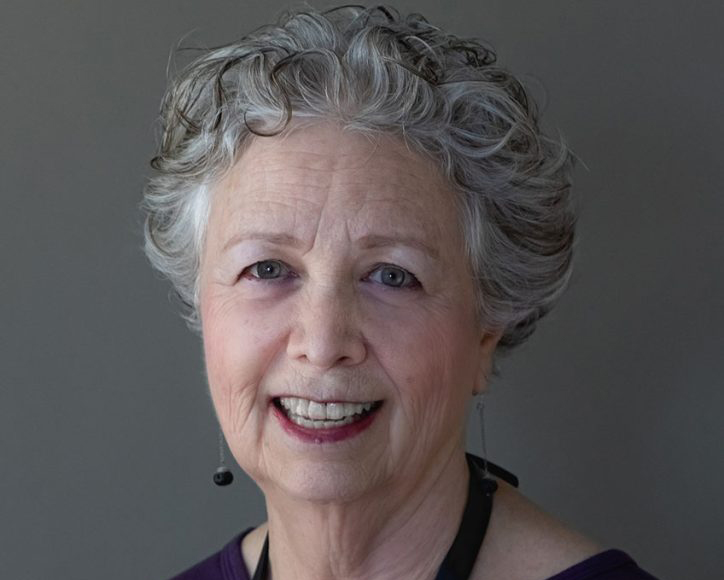
I first met Wendy Drexler at Barbara Helfgott Hyett’s table in the early 2010s. At the time, she had just come out with her first full-length book, Western Motel. Since then she’s gone on to publish two more full-length books: Before There Was Before and Notes from the Column of Memory. Wendy’s career is living proof that it’s never too late to become a poet. After years working as an editor, she started writing poetry in her 40s. Since then, she’s gone on to collect a plethora of publication credits, including RHINO, The Threepenny Review, and Mom Egg Review. Her poems have been featured on Verse Daily and WBUR’s Cognoscenti. A four-time Pushcart nominee and a Mass Cultural Council Fellow, her poetry has also appeared in unusual venues such as on the sidewalk in Mass Poetry’s Raining Poetry project and a sculpture installation in Southborough, Mass. I got to know Wendy better during poet educator training, a joint venture with Lesley University and Mass Poetry. I’m proud to call her a friend.
Frances Donovan: Tell me about your new collection, Notes from the Column of Memory.
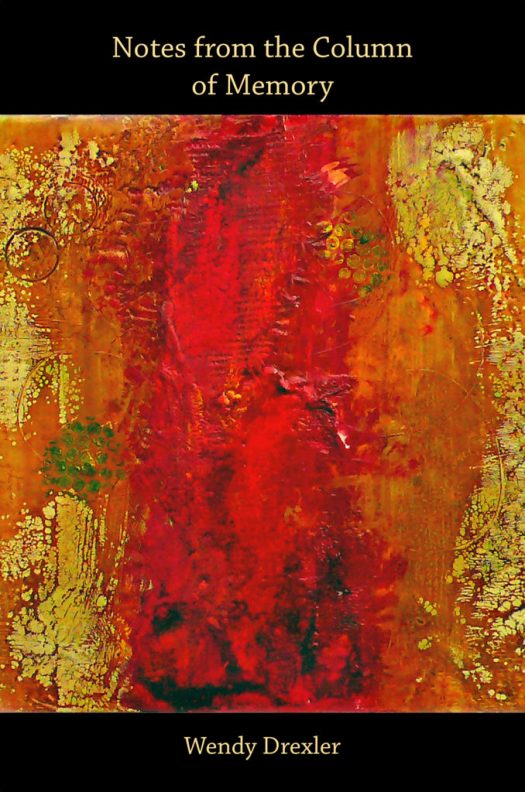
Wendy Drexler:Notes from the Column of Memory explores the hinge of memory–what we remember and how our memories change, dive, and surface as we reinvestigate the past at different stages in our lives. The past, it seems, is always informing the present. My title poem, which won the 2021 Juror’s Prize at Art on the Trails at the Beals Preserve, Southborough, is written in the shape of a column; it begins, “See how time breaks us / and still we stand.” I’ve placed a crown of sonnets at the center of the book, interrogating rituals of burial and grief (“I hear your silence working its way through the ground”) by interweaving the shamanistic burial of a woman who lived 10,000 years ago in the Levant with the death of my mother when she was 56. I also recall and extend concern for other living beings in a world in which many species are being diminished–from the pet red-eared slider I lost in the grass when I was a child, to the giant Galapagos turtle, and from a rose-breasted grosbeak “called in” by a birder replaying the bird’s own song on a speaker to the groundhog I ran over in my car. Much of this book was written during the pandemic and in my poem “And I Say Yes to the Grass,” I affirm “Yes to the time we live with / because we’ve got to live with it, / yes to loving better, to coming in / from anywhere.”
Donovan: What first brought you to poetry?
Drexler: I’ve always loved words, and while I worked professionally as an editor for many years, I didn’t discover until decades later that I might have something of my own to say and a way to say it. In high school I wrote a poem or two, and read a little poetry: I remember John Lennon’s In His Own Write, and in college, Kahlil Gibran, which everyone was reading then. I came to writing poetry when a friend gave me Julia Cameron’s The Artist’s Way and I began to keep “morning pages,” three notebook pages written with a fountain pen first thing in the morning. The idea was not to look at what you’d written for six weeks so you wouldn’t judge yourself. After that I would feel the urge to write when I was inspired by the natural world, for example, watching a blue heron trying to swallow a huge frog or finding dozens of sand dollars washed up on a beach. After these forays, I began to take poetry workshops with Susan Donnelly and then with Barbara Helfgott Hyett, who became my longtime friend and poetry mentor.
Donovan: Tell me a little about your development as a poet. Did you pursue formal training or are you self-taught? Do you belong to a workshop or writing community?
Drexler: My primary mentor has been Barbara Helfgott Hyett, who also became a dear friend. I joined her PoemWorks workshop in 2001 and continued until she stopped teaching a few years ago. From Barbara I learned free writing, which I still practice many Monday mornings with a cohort of former PoemWorks poets. I’m also part of a weekly poetry discussion group and a weekly leaderless poetry workshop with former PoemWorks friends and other poet friends. All of these groups are on Zoom. Other mentors include Susan Donnelly and all the wonderful teachers I’ve studied with at the Fine Arts Work Center in Provincetown, MA: Marie Howe, Nick Flynn, Martha Collins, Gabrielle Calvocoressi, and Carl Phillips.
John Sibley Williams has clearly been writing for some time. The author of 15 books and editor of three, he’s been nominated for a Pushcart 32 times. He’s collected a bevy of prizes as well, including the Cider Press Review Award, the Orison Poetry Prize, and the Elixir Press Poetry Award. And he’s got a volume of his selected poems translated into Portuguese coming out soon. He is the founder and head teacher of Caesura Poetry Workshop, a virtual workshop series, and serves as co-founder and editor of The Inflectionist Review.
John sent me a copy of his book The Drowning House some time ago and has patiently worked with me to produce the following interview.
Frances Donovan: Tell me about your collection The Drowning House.
John Sibley Williams: I never write toward a particular goal, preferring both poems and collections stem organically from whatever is haunting me at the time. I just write and write, often circling a handful of themes that I cannot shake: history, culture, parenthood, my privilege, self-perception, absence, human contradictions, hurt and healing.
So, in that regard, many of my poems in The Drowning House explore the same larger human concerns, be they personal or cultural. The themes are interconnected, are threads that together form a single tapestry. Be it national prejudice or fears of how I’m raising my children, our bloody history or the search for self when the self just keeps vanishing into the communal. Certain poems may push one or another theme more to the forefront, often based on our current political climate or internal changes that have reprioritized my daily life, but in the end, I recognize pretty clear thematic threads running through all my work. Currently, I’ve been particularly exploring one of my daughters’ gender identity (she came out as transgender last year) and how their family history and lineage (my wife is Japanese and her grandmother was “raised” in multiple internment camps) reaches into the present, how it molds them in our current political climate.
I met Robert Carr at the Solidarity Salon, a performance series offering music, poetry, and theater where we were both featuring. A tall man with an arresting presence, Bob read a number of poems about Robert Mapplethorpe, a photographer whose work capturing gay male desire and the BDSM subculture has become an important part of gay history. Bob is the author of Amaranth (Indolent Books), and The Unbuttoned Eye, (3: A Taos Press). His poetry appears in the American Journal of Poetry, Massachusetts Review, Rattle, Shenandoah, Tar River Poetry, and elsewhere. Robert is a poetry editor with Indolent Books and recently retired from a career as Deputy Director for the Bureau of Infectious Disease and Laboratory Sciences at the Massachusetts Department of Public Health.
Robert Carr: I wrote the book following a 34-year career in infectious disease response. These poems became my way, in hindsight, of grappling with issues of identity and sexuality through the AIDS pandemic. The editor at 3: A Taos Press, Andrea Watson, was instrumental in pushing me with these poems. Since the release of the book, in 2019, COVID19 has changed the collection for me. Today, I experience these poems as reminders for how to survive the realities of global pandemic. I’m not saying the issues across HIV and COVID19 are the same. But I do find the dynamics, the human response to health crisis, sometimes mirror each other.
Donovan: You have a whole cycle of poems in The Unbuttoned Eye about the photographer Robert Mapplethorpe. For readers who may not be familiar with his work, he was a groundbreaking photographer whose images of gay male desire during the AIDS epidemic form an important part of queer history. Some of his work was also deeply controversial. Can you explain your own relationship with Mapplethorpe and the impetus for these poems?
Steven Cramer taught one of the first seminars I took at the Lesley low-residency MFA program, and I later learned that he founded the program itself back in 2003. Like most of the Lesley faculty, his bio is studded with accolades: six books of poetry, a page on the Poetry Foundation website, prizes from the New England Poetry Club and the Massachusetts Center for the Book, and bylines in major publications like Poetry, The Atlantic, and The Paris Review. But perhaps more importantly, he’s a sensitive soul with a deep and comprehensive knowledge of literature. When I was writing a craft essay on Dickinson, I went searching for interpretations of a particularly obscure line, and an interview with him was the only relevant result.
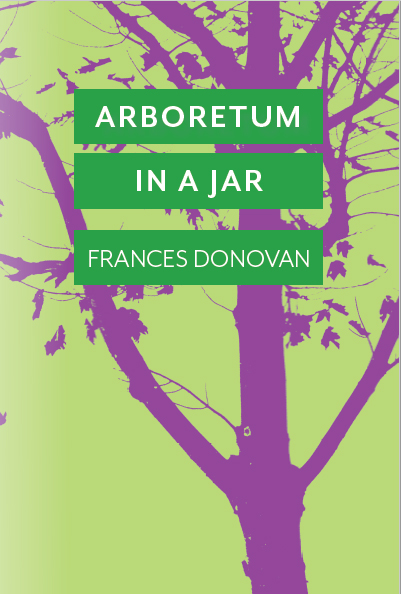
His newest book Listen (Mad Hat Press) came out in 2020 amidst all the chaos and isolation of the pandemic. Fortunately, Zoom readings have in many ways made poetry even more accessible than before. And writers often prefer to communicate using the written word. Steven and I corresponded via email for a few weeks, with prodigious results. We discussed the ways that poetry collections come together, the pros and cons of printed page versus screens, and white space as a craft element. And, as I do with every poet I interview, I asked about his individual writing practice, the ways he manages the writing life, and what he might tell poets at the beginning of their careers.
Frances Donovan: Tell me about your new collection.
Poet Steven Cramer
Steven Cramer: Listen was a peculiar collection to assemble. My previous book, Clangings, arrived in a kind of white, interruptive heat between 2010 and its publication in 2012. By the time I’d written enough poetry for Listen, some candidates for inclusion in the book dated as far back as 2004, and others came of age as recently as two years ago. How did these poems talk to each other, if they did?
I was never much good at organizing my own books. I always asked my friends for help. I had poems that wrestled—sometimes rather covertly—with three years of depression; those had to go together. I had poems that cast imaginative attention on my different clans—children (tweenish in 2004; by 2019 in no way children); a thirty-plus year marriage; the absences and presences of my diminishing family of origin; and reading, a subject I embrace without apology. With crucial assistance I came up with a first section that starts very dark, goes darker, and then begins to lift its gaze before the second section turns to the erotic life and two of its inevitable outcomes—offspring and death! A number of poems that grapple with the social world’s impingements on the personal had accumulated for a third section. Finally, there’s a group that, by and large, honors writers I love, through adaptation or homage. I think that last suite completes the upward arc from Listen’s first section.
First, my cry, then yours, split the sky above that Brooklyn hospital as you, limbs curled and purple slid out of my body after a prolonged and irreversible journey. Pain, then absence of pain.
The midwife held you up, newborn body, alive in this world. You peed an arc of urine sparkling over the bed and over her.
The champagne cork popped. We all drank to life. You suckled on a nipple. Your lips still rimmed with watery blood from that other life inside.
We lay together, suspended, holding on to each other. Tough braid of blue and red still binding us cut for the first and last time.
From All Born Perfect, by Carla Drysdale. Published by Kelsay Books. This poem first appeared in the chapbook Inheritance from Finishing Line Press. Republished with permission of the poet.
Flourish, unwashed, unpeeled, bouncy boys; grow, citizen-workers, clothed in good dirt— dearest ones, I place my hope in you— your green is king, in my garden. Chopped, you are cukes, (my Wisconsin mamma loschen)—fluted, celebrated, bobbing in vinegar and dill; tastiest brine. Emperor Tiberius, whom Pliny the Elder called the gloomiest of men, enjoyed cucumbers every night with dinner—yes, an attempt to self-medicate depressions— but was his gloom depression or prophetic vision? Caligula succeeded Tiberius. Today, the sky is blue— so what. I cannot stop worrying about the republic. When a Roman woman wanted a child, she tied cucumbers about her waist; what, you ask, do I want? Regime change. I want a sister or three, subversive, fomenting coffee klatch, chatter, plots against fascists over our Gurkensalat, lopped, swished with sour cream—dearest cukes, delight, nourish, fortify me—I want insurrection.
by Lisa Bellamy. Originally published in Salamander No. 50, Spring/Summer 2020. Reprinted with permission of the poet.
By the man-made lake? A hole so shallow and muddy, all the men held hands, formed a human net and walked toward each other to the center to feel for some kid who might have gone under–there,
on its shore, in the Kodak, me, in my little terry cloth bikini, all round as the moon stomach. I’d worn a Batman mask attached
by a thin rubber band all summer, my hands fisted, the nails bit crescents in my palms.
The summer of my menarche? I stood
against the lazy Susan in the kitchen and watched the President resign on the small TV: I cried because of the cramps and blood, the garter belt biting me. My mother said we’d never see this again and she was wrong:
even married to my father, she couldn’t predict the depth of a man’s rage.
A year after my abortion?
The clinic three stops down from my dorm, three quick stops on the Green Line, and no one shot there yet but escorts needed, one pink set of rosaries flung at my face.
That year, the year of Ferraro, my aunt said she wouldn’t vote for anything
that menstruated, could get pregnant, could bear a child.
– Jennifer Martelli, from In the Year of Ferraro, published by Nixes Mate, 2020. Republished with permission of the poet.
This is part of a series called Dispatches from an MFA, which details my experiences in the low-residency MFA program at Lesley University. In the third semester, I studied with poet Adrian Matejka. We spent the semester working on my craft essay, a long term paper that does a deep dive into a particular craft element–in my case, poetic line and how Adrienne Rich and Gwendolyn Brooks have influenced contemporary intersectional female poets. This is the cover letter to the first packet.
Dear Adrian:
Thanks for taking the time to respond so thoughtfully to my emails this month, as well as for the additional reading suggestions.
It’s funny—my first semester, I did the craft annotations ahead of the poetry revision and writing. This semester, I did my revisions and new writing first, all while stressing out about the craft essay thesis and outline. Either way, the critical work still stresses me out more than the writing and revising. I suppose this is why I’m getting an MFA instead of a PhD in literature.
I was surprised at how quickly I managed to work my way through the stack of poetry books. Some of the collections definitely spoke to me more than others. As you know, I was immediately taken with Morgan Parker’s There Are More Beautiful Things Than Beyoncé. I went ahead and order her first book as well, but I just couldn’t connect to it the same way. Natasha Trethewey’s Bellocq’s Ophelia was a quick read – the language is so beautiful, the narrative so clear and sequential, and the forms of the poems so similar that it reads almost like a novel in verse – in fact, it was an easier read than David Rakoff’s novel in verse.
Reading theory about poetic line was tougher going. I got through the Longenbach in about a day, mostly through extreme effort of will and because it’s a relatively small text. My main takeaway was the notion of the annotating versus the parsing line. He argues that enjambment “annotates,” or calls attention to a word outside of the usual phrasing of a sentence, whereas a parsing line merely ends where there would be a natural pause. I discovered A Broken Thing: Poets on the Line, a treasure trove of many different poets’ theories and opinions about poetic line. I rented it as an ebook for a few months rather than paying three times as much to own it. As a result the reading has been slow going. When I read on screen rather than on paper, I find it harder to absorb the material. I’ve been keeping a Word window screen minimized next to the ebook so that I can take notes while I read. I’m about two-thirds of the way through the thing now. The tone of the essays varies a great deal, some of the poets writing almost entirely from personal experience and others trying to make more general pronouncements about the line and what it means. In the introduction, Anton Vander Zee sums up the Levertov essay on the line better than I could: that the line tracks the stress of inner thought, and that the line is a script for performance. Three other takeaways:


 Garden of Words