Interview with Poet Lesley Wheeler, Author of Radioland

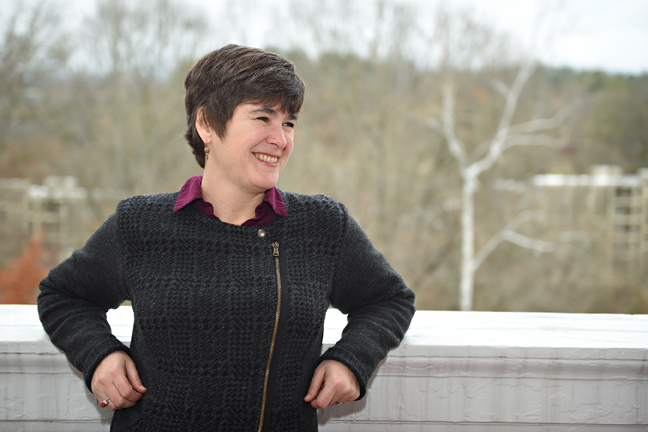
Photograph of poet Lesley Wheeler

A much-decorated poet and academic, Lesley Wheeler’s accolades include a Fulbright scholarship, an NEH grant, the Barrow Street Poetry Prize, the James Tiptree, Jr. Award Honor List, and publication in many prestigious journals, including Poetry and Slate. She teaches English at Washington and Lee University and is an active member of the WOM-PO Listserv, an email discussion group for women poets that’s been around since before blogging and social media overtook online community platforms like Listservs. Her third book of poetry, Radioland, came out in October 2015. In spite of her rise to fame in recent years, Lesley remains a warm and generous correspondent. She took the time to answer some questions about her latest book, the po-biz, and the difference between writing and publishing.

Cover image of Lesley Wheeler's third book of poetry, Radioland
Radioland, Lesley Wheeler’s third book of poetry

You’ve gotten a lot of recognition for your work in the past few years. How have these changes in your career affected your writing?

It’s funny how happiness works—successes don’t warm you for long but difficulties worry you constantly. The life change came with my first two books, Heathen in 2009 and Heterotopia in 2010. Suddenly I felt able to call myself a poet. After the Barrow Street Press Poetry Prize, people seemed to take my work more seriously. The judge, David Wojahn, is highly respected by other writers, and that made a difference. “Fulbright” is a magic word—as well as representing an amazing opportunity—but I won that for scholarly, not poetic, research. My scholarly credentials remain fancier than my poetic ones and the two networks have surprisingly little overlap. In fact, having a foot in both worlds invites suspicion from both sides.

Continue reading “Interview with Poet Lesley Wheeler, Author of Radioland”
Boston Area Poetry Readings for October and November 2015

I usually post only the upcoming month’s reading so as not to overwhelm you, gentle reader. But Daniel Bouchard, the poet who compiles these listings, sends dates much farther into the future. Time moves faster in the fall in Boston, so here’s a cornucopia of readings for the next six weeks. Get some dates on your calendar now before it’s full of harvest festivals, Halloween parties, and turkey dinners.

Thursday, October 15, 7 pm
Central Square Press Editor Enzo Silon Surin and Afaa Micheal Weaver
Trident Café and Booksellers
Boston Poet Spotlight Series
338 Newbury Street
Boston, MA

Continue reading “Boston Area Poetry Readings for October and November 2015”

On Samhain and Being a Bad Witch

Think of the year as a wheel. Then divide that wheel at the Solstices and Equinoxes. Then divide it again between each of those days. That is the wheel of the year, and those eight holidays are the days when Wiccans mark the turning of the wheel. We call those days Sabbats, or the Sun Holidays. Samhain and Beltane are the two biggest deals in the Wiccan calendar. Many witches also observe the phases of the moons, or the Esbats. They’re important too, but I’m not going to talk about them right now. I’m going to talk about Samhain and why I am a bad witch.

Continue reading “On Samhain and Being a Bad Witch”

Interview with Nicci Mechler of Porkbelly Press

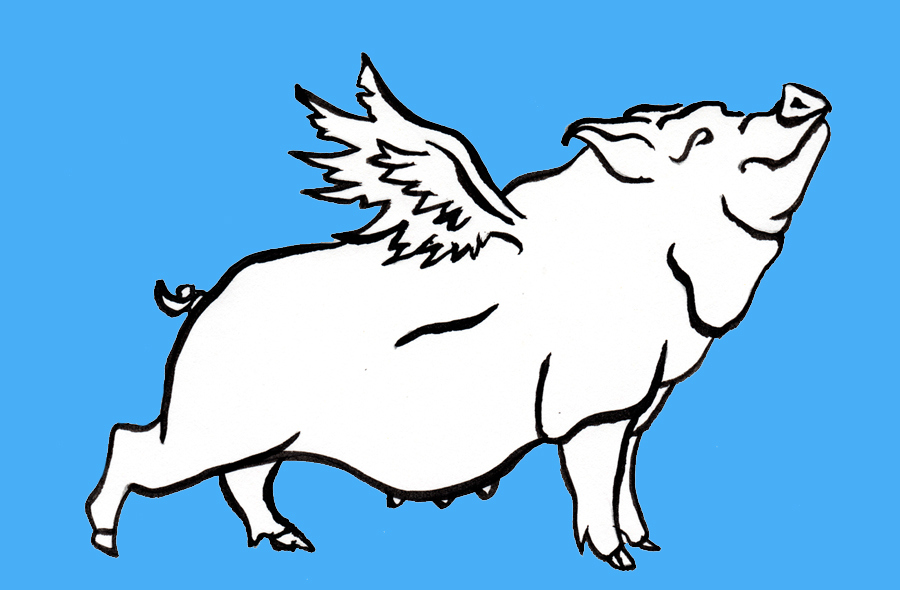
Line drawing of a pig with wings against a blue background

Chapbooks and zines from Porkbelly Press arrive tied in pastry string with a handwritten note from the editors thanking you for supporting small presses. The chapbook I purchased — Blood Knot by Suzanne Rogier — evokes a similar handmade detail, both in the object and the poems they contained. I spoke with Porkbelly publisher Nicci Mechler about the press and its creations.

What inspired you to start the press? Is there a story behind the name?

Photograph of Blood Knot by Suzanne Rogier, a chapbook from Porkbelly Press
Blood Knot by Suzanne Rogier, a chapbook from Porkbelly Press

Porkbelly Press came a year after our literary magazine, Sugared Water. I’d worked on lit mags for years, and produced zines, and my chapbook collection was growing. It seemed a natural progression to try out a chapbook line, to use my book arts and love of lit to craft some beautiful chaps. Porkbelly exists to boost the signal.
We make our home in Cincinnati, Ohio, not too far from the banks of a pretty fantastic river. Back in the days when the fathom was where it’s at, and people yelled stuff like, “by the mark twain!” (even Mark Twain himself), our architecturally-gorgeous (and besotted of beer) little burg ferried out a whole heap pork belly. We were big on pig. You can still see the evidence in 1) the city’s consumption of breakfast sausages (like goetta), and 2) the pig art and statuary all around town.

Naturally, we took that delicious callback to days gone by and smashed it into a press name; pork belly became Porkbelly and a press was born. In the words of one delightful Irishman, our “rather portly winged pig [is] a symbol of hope if I ever saw one.” Well, yes. Hope and bacon. (No bacon is harmed in the production of these chapbooks.) Continue reading “Interview with Nicci Mechler of Porkbelly Press”

Poetry Workshop Update and Field Trip

This Thursday is the penultimate workshop of the fall term. I’m really pleased with how the group has come together. I have a nice core of participants who have been there since the summer but also have room for new people. I’m also getting more confident in developing a model that differs from other workshops I’ve attended.

dreamstime_head_tree_logo_72dpiThe metaphor of a garden of words really applies here. With its focus on positive feedback to new drafts, Toni Amato’s workshop is a wonderful place to nurture seedlings. With its focus on poetic technique and ruthless revision, Barbara Helfgott Hyett’s workshop is excellent place to thin and harden those seedlings. My vision is to create a hybrid of those two models: to develop both fluency and objectivity when looking at our work.

In earlier sessions we focused primarily on sprouting new seedlings. Germination happens through free-writes, the use of different writing prompts, and a close reading of a “host poem” — one which I feel has something to teach us about technique or language. We give first drafts written in workshop nothing but positive feedback  Now that we all seem to have developed a greater level of confidence — both in ourselves and in each other — I’ve asked people to start bringing printouts of more finished drafts. Something happens when you transfer a poem from longhand to type. I almost always end up revising as I go. Seeing it in print also gives me emotional distance. We’ve begun critiquing one another’s drafts, but in a manner that I hope is gentle and supportive. Other members of the workshop seem to appreciate this second phase of the poem-growing process.

If first and second (and third, and fourth, and fifth, and more) drafts grow a poem from scratch, the poem finally bears fruit with publication. It can be hard to keep all three balls in the air at the same time. I find that I usually fluctuate between creating and revising my work and sending it out for publication. Starting in January I made a concerted, consistent effort to send out my work and got much better results than I expected. I’ve given my students a few pointers on where they can find open calls, but the focus of workshop right now is still on creation and revision. I’m curious to see how that might grow and change in future sessions. In the meantime, I continue to be humbled by how much I learn myself while facilitating workshop. Artists really do develop in tribes, just like Julia Cameron says. I’m happy to be following in the footsteps of my teachers by creating one of my own.

Our small tribe will be taking a field trip to the Chapter and Verse Reading Series this Friday, October 9 at 7:30. The Jamaica Pond Poets are talented and welcoming bunch. I look forward to both the featured readers and the open mic that follows.

Trigger Warning: Jesus is Lord, Francis is Pope

Pope Francis’s recent visit to the United States raised a lot of complicated feelings for me. On the one hand, I’m glad he walks the walk of his namesake. In the other hand, it’s far too little and far too late; nothing he does or says in his tenure as Pope is likely to repair the damage of my Catholic upbringing. Continue reading “Trigger Warning: Jesus is Lord, Francis is Pope”

Poetry Reading: Small Animal Project this Friday October 2 in Cambridge, MA

Stephanie Ford, Kevin McLellan, Annie Won

Small Animal Project invites you to its first fall reading, featuring Stephanie Ford, Kevin McLellan, and Annie Won.

Outpost 186
186 1/2 Hampshire Street
Cambridge, MA
Friday, October 2
8:00 pm (doors open at 7:45)

About the readers 

STEPHANIE FORD is the author of All Pilgrim, forthcoming from Four Way Books in 2015. Her poems have appeared in Boston Review, Fence, Tin House, Harvard Review, Gulf Coast, and many other journals. Originally from Boulder, Colorado, she now lives in Los Angeles.

KEVIN MCLELLAN is the author of Tributary (Barrow Street) and the chapbook Round Trip (Seven Kitchens), a collaborative series of poems with numerous women poets. The chapbook Shoes on a Wire (Split Oak Press) and the book arts project [box] (Small Po[r]rtions) are both forthcoming. THRUSH Poetry Journal and The Journal of Compressed Creative Arts nominated his writing for the Pushcart Prize. Kevin has taught poetry workshops at the Cambridge Center for Adult Education and at the University of Rhode Island.

ANNIE WON is a poet, yoga teacher, and medicinal chemist. She is a Kundiman Fellow and a Juniper Writing Institute scholarship recipient. Her chapbook with Brenda Iijima,Once Upon a Building Block, was recently published with Horse Less Press (2014) and individual chapbook, so i can sleep, is forthcoming from Nous-Zot Press (2015). Her work has appeared in or is soon to appear in the following venues: New Delta Review, Entropy, Delirious Hem, TheThePoetry, TENDE RLION, Similar:Peaks::, and others. Her critical reviews can be seen at American Microreviews and Interviews.

Directions

Outpost 186 is located on Hampshire Street, between Prospect & Amory streets. There’s metered parking on both Hampshire & Cambridge streets, as well as permit parking on the side streets nearby.

The closest T stop is Central Square on the red line. Exit station & walk up Prospect 0.5 miles to Hampshire Street (intersection with 7-Eleven & Hess). Take a left onto Hampshire. Take first left onto path just behind 7-Eleven & walk to the brown shingled house behind another (bigger) brown shingled house.

The 83 and 91 buses run from Central Square & stop at the intersection of Prospect & Hampshire.

The 69 bus runs between Lechmere & Harvard Square, with a stop at the intersection of Cambridge & Hampshire, just in front of 1369 coffee shop.

Contact/Other

Jessica Bozek at smallanimalproject@gmail.com
See also http://smallanimalproject.tumblr.com/readings

——————————–

Editor’s Note: This notice is re-posted from the Small Animal Project email newsletter. To subscribe, email Jessica Bozek at smallanimalproject@gmail.com.

“Grief Ambition Knot of Self” Published in the Fall 2015 Issue of Snapdragon: A Journal of Art and Healing

My poem “Grief Ambition Knot of Self” appears in the Fall 2015 issue of Snapdragon: A Journal of Art and Healing. Many thanks to Jacinta White for her work on The Word Project and Snapdragon.

grief, ambition, knot of self that won’t untangle, fear of my own
banked fires, caught between frost and sunshine, caught between

Read the entire poem here

Boston Area Poetry Readings for September and October 2015

Poetry and all that jazz

Poetry readings lie thick as apples on the ground this time of year. Be sure to check out some mainstays of the Boston poetry scene: Tom Daley, Jill McDonough, and Doug Holder to name a few. Commemorate 9-11 with the BASH reading series put on by Black Ocean Press, one of the hippest scenes in town. Or catch Daniel Bouchard — the  gentleman who sends out these listings via email — at Harvard just before Halloween.

If you’re in the mind to write some poetry of your own, consider attending my poetry workshop which runs every other Thursday this September and October. We’ll hit the open mic at the Chapter and Verse reading series in October, so come along if you’d like someone to cheer you on.

Thursday, September 10, 6 pm
“Performing Democracy: Private Citizens on the Public Stage”
Poet Edward Hirsch leads a discussion including playwright Rebekah Maggor, director and translator Bryan Doerries, and BC Law Professor Frank J. Garcia (presenting the work of James Boyd White), on theater’s vital role in enacting the questions and values that nourish and sustain democracy.
Clough Center Series on the Arts and the Culture of Democracy
Boston College
Devlin 101
Chestnut Hill, MA
Free

Continue reading “Boston Area Poetry Readings for September and October 2015”