I got up to close the window
and saw her
she was spinning in the yard
and painting the leaves on my treessorry I was late
— Kellie Elmore, Autumn’s Apology
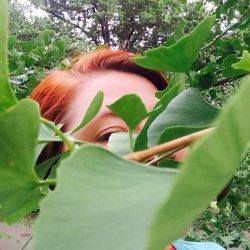
tended by poet Frances Donovan
I got up to close the window
and saw her
she was spinning in the yard
and painting the leaves on my treessorry I was late
— Kellie Elmore, Autumn’s Apology
This review of Dark Tide: The Great Boston Molasses Flood of 1919, by Stephen Puleo is re-posted from my Goodreads feed.
In January 1919, a 2.3-million-gallon tank of molasses located in Boston’s bustling North End burst, wreaking death and destruction in its wake. Most people — myself included — laugh in disbelief when they first hear of the incident. But the towering wave, which traveled at 35 miles an hour, claimed the lives of 21 people, and transformed the North End into a moonscape, was deadly serious. Puleo does an admirable job of extracting a living tale about this event from dry court records and newspaper accounts.
The circumstances of its construction, its failure, and the criminal and civil trials that followed all serve as a focal point for the major forces sweeping through the country at the beginning of the last century, including industry’s increasing footprint on the American economy, the impact of World War I and the Prohibition, corporate negligence, and the radical anarchist movement.
Puleo’s book focuses on the lives of the individuals surrounding the case — not the major historical figures we usually read about, but the ordinary people who lived and worked in the North End neighborhood, built the molasses tank, managed the plant, and investigated the disaster afterward. His storytelling is grounded in primary sources but manages to bring alive an event that happened almost 100 years ago and had a profound impact on the way business is conducted today.
A woman named Calliope invited me to join a group blog called “Standing Loud: A place where a loud, proud woman can speak her piece.” On Friday I published my first article on the topic of Loudness and Lovingkindness. Please take a look and comment if you like. Here’s an excerpt:
Which brings me to the subject of loudness — loudness and lovingkindness. Loudness versus silence, that’s something I think I’ve found a happy medium about. But lovingkindness is another alluring, foreign concept that I’m learning — through practice and more practice — to understand and incorporate.
The Boston Review has been sending me messages on Facebook every day for National Poetry Month (or NaPoWriMo, as the more intarweb-geek among us have been calling it). My initial reaction was just “too much poetry.” It felt like work, especially since I have a very complicated relationship with writers’ community in general. I’ve also been known to focus on the negative instead of the positive. And there was a song about that.
So I was reminded that reading other poets — and looking at art in general — can instigate a cycle of percussion that John Updike once described in a story we read when I was studying 11th grade English with Mr. McWilliams. Updike’s story went something like this: the pianist hits the key, which causes the hammer to hit the string, which sends out a sound wave that travels through the air to hit the eardrum of a listener, which causes a whirl of percussion in the listener’s brain, resulting in the pen hitting the paper, perhaps resulting in a poem or a story that inspires a musician to write down some music, which a pianist then plays…
All of which is a long-winded way of saying that I do find the work of others inspiring, in spite of myriad disappointments and roiling resentments. I forget, sometimes, that I could be one of those poets with the long list of publications after their name, if I just did the work–the very very hard work–of putting pen to paper, and revising, and editing, and researching publications, and sending out submissions, and exposing oneself to criticism and rejection but also to acclaim and acceptance.
Katie Peterson says something similar, slightly macabre, about percussion, and memory, and reminders, and tangents, and hopelessness, and returns:
Sick in bed with a sore throat
I can’t get out of my mind
the image of the cat
harpsichord from the 18th century‚
soothing a prince with laughter.
Full poem here: http://bostonreview.net/NPM/katie_peterson.php
It seems that some writers can just up and form close friendships — whole schools, even — with other writers. I wish this were more often the case with me. If it were, perhaps I’d already be published and successful and happily ever after by now. I alternate between blaming all writers everywhere and blaming myself. But maybe, as with most things, it’s not a black-and-white proposition. And maybe– just maybe — casting blame is not really all that productive. Perhaps I get my gold star just by persisting — in reaching out, making connections, and nurturing writerly friendships — in spite of failures and disappointments.
And now that I think about it, I have had a number of successes. There’s the small group that grew out of connections made at Poetry@Prose which has been meeting regularly. I’m a part of it, but not the owner of it. None of us are. We just keep showing up and plodding away with our careful little poems, shining them, polishing them, picking out the gems and nurturing each other’s work with praise and gentle, gentle suggestions.
Alas, not all interactions go so well. Writers can be a prickly, solitary lot. I know this because I am a writer. About a week ago, I got an email from a poet whom I admire a great deal. She and I also met through Poetry@Prose, but we’ve had much greater difficulty following through on a mutual desire to collaborate — or even to meet up in person. This email asked if I would like to engage in some mutual support around National Poetry Month. (That’s April, the cruellest month, in case you weren’t keeping track.) Being the technically apt person that I am, I saw that she bcc’d me, which implied I wasn’t the only one she’d invited. I replied with a hearty yes, and since the bcc implied it wasn’t a private party, I cc’d the two other members of my writing group, recommending them as kind and generous fellow writers. She replied that she wasn’t up to emailing drafts out to strangers — a sentiment I can certainly understand and identify with. And then the whole email chain just sort of went… downhill.
A quick phone conversation probably could have sorted out the whole thing. But for a variety of reasons, that didn’t happen. And so two well-intentioned writers found themselves smack up against the limitations of written expression. Both of us fell away from the interaction exhausted and disappointed. I can only hope it hasn’t completely poisoned what tenuous connection exists.
One benefit of the whole thing, however, is that it’s gotten me thinking about National Poetry Month (or NaPoWriMo for the more abbreviation- and internet-enabled among us) before the month actually starts. Back in November (aka NaNoWriMo) I attempted a poem-a-day writing challenge that crashed and burned in the ruins of, well, what usually happens in November. But I’d like to try it again. And I’d like to do it lazy and simple — an approach that doesn’t come naturally to me. I’d love, of course, to do it with a group of supportive fellow poets but I’m not sure such a group exists — at least not for me, at this particular dot on the timeline. So I’m going to try my hand at a haiku a day for the month of April. In the spirit of lazy and simple, I’m going to post these haiku only Monday through Friday, and only for the month of April. Feedback is welcome, as long as it’s positive or in the form of haiku itself.
Too much to say, not enough to say. This is just to say that I have eaten the plums that were in the icebox and which you were — No, that’s what William Carlos Williams said.
A little while ago I started a long and rambling post about my late-February trip to California (already, it’s been four weeks since my departure!). Then, instead of clicking “Save draft,” I clicked “Publish.” And thanks to the power of the Intarwebs 2.0, all y’all got a peek at it. More than a peek, on RSS and via email. Which made me retreat further into myself.
So consider this post a sort of clearing of the throat. A burst of rusty water from the pipe. A blogospheric petit four. Now that I’m blogging into the Great Beyond without even my old Livejournal friends for company, I find myself with a bad case of stage fright. The bright, bright lights; the black, black house.
California filled my mind with images and colors and textures and flavors — experiences of the moment, memories from childhood, epiphanies from both. Returning to Boston filled my sinuses with gunk and my mouth with cotton. In between the two, I’ve just been trying to return to equilibrium. Because of course, when I least expected it, chronic illness raised its ugly head. And while I battled with a cold and the symptoms the cold unleashed–symptoms of a deeper, more persistent disorder — springtime crept on little cat feet all around me. New England springtime, in the form of longer days and brief periods of warmth — just long enough to make you think you didn’t need your long underwear anymore. Then, a one-two punch: frigid air, cloudy skies.
First the crocuses, then the snow. Snow on tulips. That, my friends, is springtime in Boston. But the supermoon came and went on Saturday, and the vernal equinox the next day, and I’ve been clawing and plodding my way back to health. And maybe soon I’ll even be able to tell you properly about my latest pilgrimage back to the place of my birth. And the books I’ve been reading — especially that new one by Andrew Himes.
I don’t check my RSS feed as much as I used to. You could either blame my job, for giving me more to do, or possibly Hulu and Netflix, for giving me more passive entertainment options. Personally, I blame either G.W. Bush or global warming.
Seriously, though, I came across a wonderful post on Information is Beautiful about horoscopes and word analysis (apparently the latest fad among statisticians — and you know those crazy fad-conscious statisticians).
You could just take a look at it yourself and draw your own conclusions from the data. Or, you could keep reading this post for another 60 seconds and learn that it reminded me of something Douglas Adams said in one of his later novels. I can never remember if it was The Long Dark Teatime of the Soul or Mostly Harmless or one of the other ones, so I haven’t been able to look it up. I’ll paraphrase it, though, like so:
You take something as inherently chaotic and unpredictable as human nature. You apply an arbitrary set of rules to it. Et voila, your rules work.
Most of the scientists I’ve met don’t like data that can’t be hammered down to at least two significant digits, which means that they read their horoscopes only furtively. I find all that crystal woo-woo stuff great fun and enjoy learning the arbitrary rules of divination systems with the same glee that I enjoy learning the arbitrary rules of grammar, social mores, and fashion.
What I found particularly stunning — poetic, even — was the meta-horoscope those crazy statisticians over at Information is Beautiful were able to create from their analysis. And I now present to you, the poem the statisticians wrote.*
Ready? Sure?
Whatever the situation or secret moment, enjoy everything a lot.
Feel able to absolutely care. Expect nothing else. Keep making love.
Family and friends matter. The world is life, fun, and energy.
Maybe hard. Or easy. Taking exactly enough is best.
Help and talk to others. Change your mind
and a better mood comes along…
From “Horoscoped: Do horoscopes really all just say the same thing? We scraped & analysed 22,000 to see.” at http://www.informationisbeautiful.net/2011/horoscoped/
*I edited it slightly because I can’t stand center-justified poetry and feel really strongly about the serial comma.
I’ve been nostalgic for The Homeland recently, probably because I often go to visit family there this time of year.
“If someone climbs quietly up to the treehouse and peeks at me through the window while I’m working, they may think I’m merely taking a nap. This is a part of the work of solitude, part of being with me. Thinking, considering, observing, pondering–these are the tools of my trade and occasionally they have to be wielded lying down with my cap pulled over my eyes.”
— Peter Lewis, Treehouse Chronicles: One Man’s Dream of a Life Aloft. See the treehouse

 Garden of Words